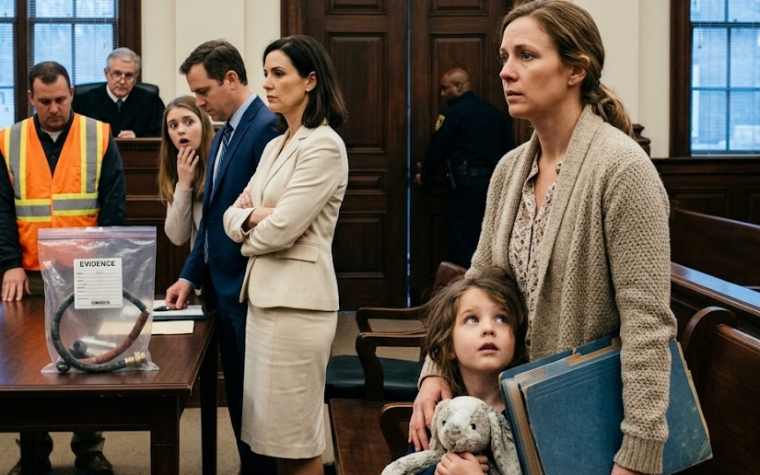
William stared at the pages as if the numbers might change if he waited long enough.
They didn’t.
Rebecca leaned closer, but he folded the top sheet halfway over before she could see it clearly.
“What is it?” she asked again.
William ignored her.
His eyes stayed on me.
“What did you do?”
I sat across from him at the same table where, fifteen years earlier, he had reached into his jacket pocket and asked me to spend my life with him.
Back then, his hands had trembled because he was nervous.
Now they trembled for a different reason.
“I read the papers you asked me to sign,” I said.
“Then I read the papers you didn’t show me.”
His jaw tightened.
Rebecca glanced between us.
“William?”
He lowered his voice.
“Jennifer, this is not the place.”
That almost made me laugh.
He had chosen this place to celebrate the end of our marriage with the woman whose name appeared repeatedly in the financial records he had sworn were complete.
But suddenly he cared about privacy.
“You’re right,” I said.
“We don’t need to discuss it here.
The envelope is just your copy.
My lawyer already filed the originals.”
William looked down again.
The first document was a preliminary forensic-accounting summary.
Behind it was a copy of the filing challenging the financial agreement I had signed.
When William asked for the divorce, he had presented me with numbers that made our finances look simple.
The house.
Retirement accounts.
Savings.
Debts.
His medical practice, described in a way that made it appear heavily burdened by expenses and far less valuable than I had assumed.
I had signed because I was stunned, exhausted, and still trying to understand how a man could erase fifteen years with the phrase “I’ve outgrown this.”
William had counted on that shock.
What he hadn’t counted on was my lawyer telling me to document everything.
The forensic accountant had started with records already legally available to me as his spouse: joint tax returns, household files, statements, and copies of business-related documents stored in our home.
The first irregularities were small enough to overlook.
A recurring payment to an outside consulting company.
Reimbursements with vague descriptions.
Travel charges that didn’t correspond with the conferences marked on our family calendar.
Then the accountant matched dates.
A hotel expense from a weekend William had told me he was covering another physician’s call schedule.
A transfer made two days before Rebecca appeared at a hospital fundraiser wearing a bracelet I remembered because she had complimented mine.
Monthly payments to a consulting entity connected to Rebecca’s surname.
None of those facts alone proved everything I suspected.
Together, they justified more questions.
The conversation with the practice’s former bookkeeper answered the first one.
“Rebecca has been receiving money from the practice for years.”
When she said it, I had stopped breathing for a moment.
“For what?” I asked.
The woman hesitated.
She told me Rebecca had been listed as providing occasional administrative and event-related consulting.
But the payments had continued long after the work she knew about had ended, and some amounts had increased without an explanation she understood.
That sentence changed the timeline of my marriage.
Until then, I had been telling myself the affair might be new.