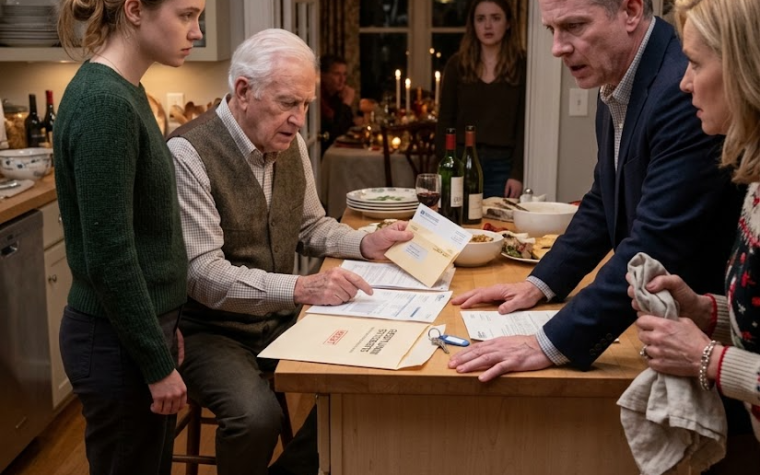
At 5:58 the next evening, the doorbell rang.
Madison stood behind me in the hallway, holding her phone at chest level.
She had been recording pieces of the house all afternoon, narrating them as evidence of my supposed cruelty.
When I opened the door, the confidence left her face.
A locksmith waited on the porch with a compact black case in one hand.
Beside him sat two unopened boxes of new locks.
Dad came out of my home office.
Mom followed from the kitchen, wiping dry hands on a towel I had purchased.
“What is this?” Dad demanded.
I asked the locksmith to wait on the porch.
Then I closed the door, placed a blue folder on the hall table, and opened it.
The first page was a certified copy of the deed.
Only one name appeared beneath the property description.
Laura Bennett.
Dad leaned closer.
His face lost color, not because the information was new, but because I had finally placed it between us where he could no longer pretend it did not matter.
Madison lowered her phone.
“That proves you signed paperwork,” she said.
“It doesn’t mean this isn’t our home.”
I turned the page.
The next document was the closing statement from the day I bought the house.
It showed the down payment transferred from my savings account.
After that came three years of mortgage records, property-tax payments, insurance premiums, utility bills, grocery receipts, repair invoices, and bank statements.
Every payment came from me.
There was not a single transfer from my parents.
Not one rent payment from Madison.
Not even a contribution toward the leaking water heater Dad had insisted was everyone’s emergency until the invoice arrived.
Mom stared at the stack.
“Why would you keep all of this?”
“I’m a lawyer,” I said.
“I keep records.”
Dad’s expression hardened.
“You’re using your job to intimidate your family.”
“No.
I’m using facts to end an argument you built on guilt.”
I flipped to the final section.
That morning, before anyone else woke up, I had reviewed the local housing rules and spoken with an attorney who handled residential matters.
I had no intention of making an illegal move just because I was angry.
The twenty-four-hour deadline was not a threat to throw their belongings onto the lawn.
It was a deadline to choose how they intended to leave my house.
The locksmith was there to rekey my home office and master bedroom immediately.
Those rooms would return to me that night.
The exterior locks would be changed once they surrendered their keys and moved out.
If they refused to leave voluntarily, the folder contained formal written notices beginning the legal process.
Dad read the first notice twice.
“You would take your own parents to court?”
“I would rather not.”
“That isn’t an answer.”
“It is the only answer you left me.”
Mom pressed a hand to her chest.
“After everything we did for you?”
I looked at her.
“What did you do for me during the last three years?”
Her mouth opened, but no answer came.
I did not ask about childhood.
I did not deny that they had raised me, fed me, driven me to school, or sat through graduations.