Not as a difficult old man.
As the man who had brought him home.
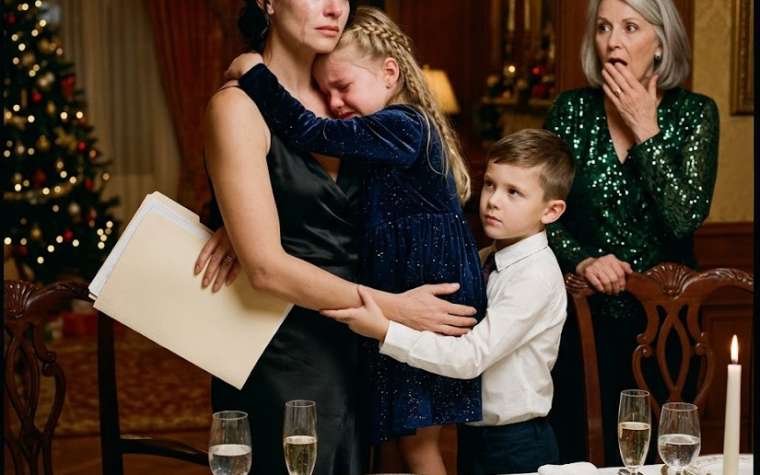
When Mercer finished, the room stood.
I looked toward my parents.
Mom was crying.
Dad stared at the floor.
My brother had both hands clasped in front of him.
Afterward, Mom approached me near the door.
“We didn’t know,” she whispered.
I looked at her for a long moment.
Part of me wanted to say something unforgivable.
Instead, I said the only thing that mattered.
“You knew he was alone.”
She lowered her eyes.
There was no answer to that.
And there didn’t need to be.
Nothing could give Grandpa another hospital room with his daughter sitting beside him.
Nothing could refill those empty pews.
Nothing could make my brother take back his text.
The truth did not erase what happened.
It only made pretending impossible.
A week later, I went back to Grandpa’s grave alone.
The cemetery was quiet.
Ohio summer grass moved in the wind around the stone.
I stood there in civilian clothes with his ring on my hand.
For most of my life, I had thought Grandpa’s silence meant there were parts of him I would never reach.
Now I understood that silence differently.
He had never needed anyone to think he was important.
He had already decided what kind of man he wanted to be.
When someone called, he came.
When someone was missing, he went back.
When nobody thanked him, he kept moving.
I rested my fingers against the cold top of his headstone.
“I know what it means now,” I said.
Then I looked at the worn silver band.
For weeks, I had believed it was the last piece of Grandpa I had left.
It wasn’t.
The last piece wasn’t silver, or a military file, or a photograph of eight young men.
It was the standard he had carried quietly all those years.
I turned the ring once around my finger and remembered his words.
It reminds me who I am.
“I know who you were, Grandpa,” I whispered.
Then I left the cemetery with the ring where it belonged.
On my hand.