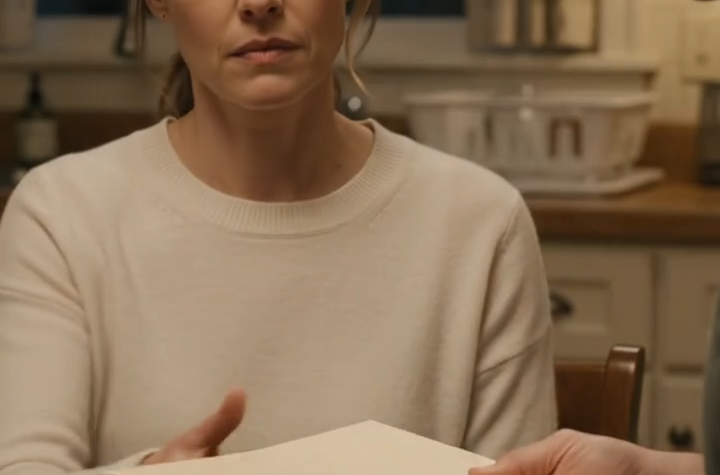
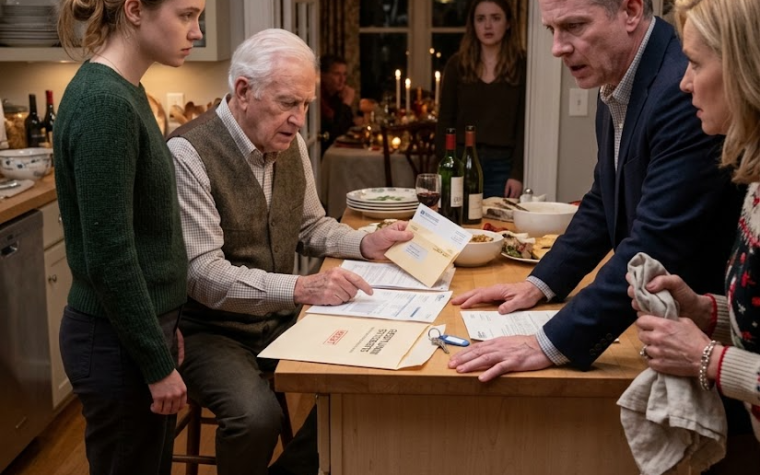
Helen stared at her mother as though seeing a stranger wearing a familiar face.
“You sold access to our child to pay your bills.”
“I managed her career.”
“She is seven.”
“She is talented.”
“She was afraid.”
Agnes looked toward Emma, who was now sitting in our car with the investigator.
“She is sensitive because you indulge her.”
That sentence ended whatever hesitation remained in Helen.
She walked to the officer and asked what was required to prevent Agnes from coming near Emma or entering our property again.
The answer was not as immediate or dramatic as films make such moments appear.
There were statements to take, evidence to preserve, and questions about who had created each document.
The officers could not promise which charges would ultimately be filed.
They could, however, document the suspected forgeries, identity misuse, coercion, and unauthorized commercial work involving a child.
They also told us to change every lock Agnes could access.
By noon, a locksmith was at our house.
Agnes was instructed not to return to the guest house without police supervision.
Helen packed a small bag of her mother’s medication and clothing.
Everything else remained inside until investigators could determine whether more records were hidden there.
They found them that afternoon.
In the bottom drawer of a desk were copies of Emma’s birth certificate, school enrollment form, health insurance card, and our travel schedules.
Agnes had taken photographs of documents from our home office and printed them.
There was also a notebook.
Each page listed dates, clothing sizes, payments, and phrases Emma had been told to repeat during auditions.
Beside one entry, Agnes had written: Must stop asking for Dad.
Remind her this helps family.
Helen read the line once and handed the notebook to the investigator without speaking.
My camera footage became crucial because it showed Agnes taking Emma from our home, changing her clothing without our knowledge, unlocking the studio, and leading her inside while Emma resisted.
The recording also preserved the time and location.
The photographer’s security system supplied additional video from earlier sessions.
Agnes had believed secrecy protected her.
Instead, secrecy created a pattern.
The catalog company suspended the campaign and notified every client that had received Emma’s images.
The studio’s drives were secured so the files could not be distributed further.
Parents of other children listed in the calendar were contacted.
Some had signed valid releases.
Others discovered that grandparents or informal caregivers had made arrangements without full permission.
Marlene insisted she had trusted the documents.
Investigators later determined that she had ignored inconsistencies because Agnes always arrived on time, paid fees, and seemed respectable.
The blue door had hidden no underground criminal empire.
It had hidden something more ordinary and, in its own way, more frightening: adults accepting convenient paperwork because asking harder questions might cost them money.
The exclusivity contract was never signed.
The existing releases were declared invalid once the forged signatures were confirmed.
The remaining funds were frozen, and a court later ordered restitution into a protected account for Emma.
Agnes lost access to the money and to every image she had commissioned.
Her legal case moved slowly.
She eventually accepted responsibility for forging documents and misusing Emma’s identity rather than forcing Emma to testify in a trial.
Additional violations connected to the unauthorized work were handled through separate proceedings involving the studio.
The court prohibited Agnes from contacting Emma directly.
Any future request for contact would require professional review and our consent.
Helen did not celebrate.
The ruling meant her mother had done exactly what the evidence showed.
There was no harmless explanation left to rescue.
For weeks, Emma asked questions at unexpected moments.
Would Grandma know where her new classroom was?
Could the blue-door people come to our house?