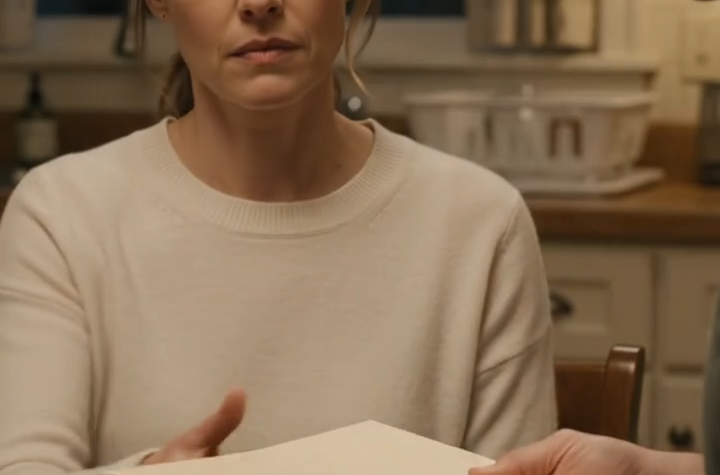
I searched her face.
“You do not have to decide tonight.”
“I am not deciding about the donation,” she said.
“I am deciding whether to learn the truth.”
That was the first moment I understood how quietly dangerous my daughter had become—not cruel, not vengeful, but unwilling to let anyone else control the facts of her life.
The following morning, I called the hospital and arranged the evaluation.
Adrian was not permitted in the room when her blood was drawn.
He waited at the far end of the corridor, standing whenever a door opened and sitting again when someone else emerged.
The briefcase was gone.
I had pushed it back across the porch before he left, and he had taken it without argument.
My daughter watched the nurse fill several tubes.
“Is his son scared?” she asked.
“Probably,” I said.
“Does he know about me?”
I did not know.
Adrian answered later, when the independent donor advocate allowed a brief conversation in a consultation room.
“He knows he has a half-sister,” Adrian said.
“He did not know how to contact you.”
My daughter’s expression sharpened.
“He is ten.
Of course he did not know how to contact me.
You did.”
Adrian looked down at his hands.
“Yes.”
“Did you ever tell him why I was not around?”
“I told him the families were separated.”
“That sounds nicer than saying you left me.”
He nodded slowly.
“It does.”
For once, he did not defend himself.
The test results took four days.
During that time, Adrian sent no messages except one update through the hospital: his son had developed another infection.
The transplant team was trying to stabilize him long enough to proceed if a donor became available.
On the fourth afternoon, the coordinator called.
My daughter was not merely a possible match.
She was the strongest match they had found.
The room seemed to narrow around me as the coordinator explained the next steps.
More tests.
A physical examination.
Meetings with specialists.
A separate psychological assessment to ensure my daughter understood the process and was not being pressured.
My daughter listened on speakerphone.
When the call ended, she sat very still.
“So it is me,” she said.
“It appears that way.”
“Can I meet him?”
The request surprised me, but the hospital agreed to a supervised meeting after both children were medically and emotionally prepared.
Adrian’s son looked smaller than his age.
Treatment had left his face pale and his body thin beneath a hospital sweatshirt.
He wore a knit cap and sat beside the window with a blanket over his knees.
My daughter stopped in the doorway.
For several seconds, neither child spoke.
Then the boy said, “I did not know if you would come.”
She walked into the room and sat across from him.
“I did not know you existed until a few days ago,” she said.
He looked embarrassed.