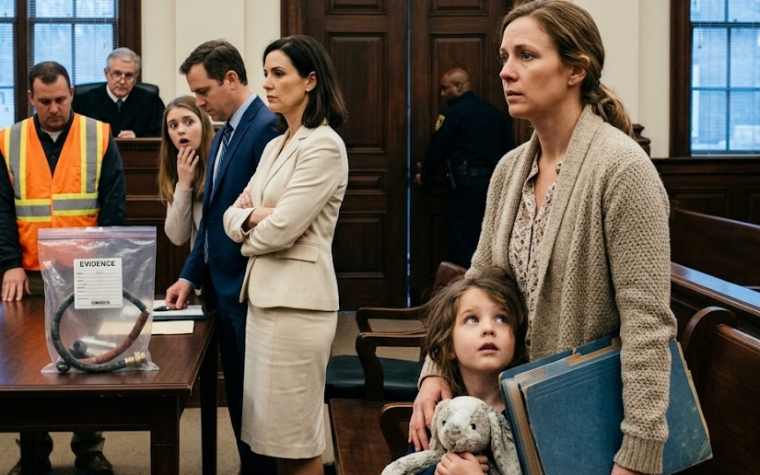
Daniel arrived with counsel, a dark suit, and the controlled expression he used in business meetings.
Vivian sat behind him.
Celeste did not come.
But her statement did.
So did Mrs.
Alvarez’s.
So did the hospital documentation, the call records, the photographs, and the timeline.
Daniel’s attorney did what a competent attorney was supposed to do.
He argued that Daniel had made a serious personal mistake but had not knowingly endangered Noah.
He emphasized that Daniel had not understood the severity of the illness when he left and that temporary orders should not become permanent punishment for marital misconduct.
My attorney agreed with one part.
“This is not about punishing adultery,” he said.
Then he placed the timeline before the judge.
“It is about what happened after the child’s mother repeatedly attempted to communicate a medical emergency.”
Daniel testified.
At first he was polished.
He said he believed I exaggerated medical concerns.
He said he thought Noah was experiencing ordinary newborn discomfort.
He said he did not realize my phone would die.
He said he did not intentionally leave me without transportation.
Then my former partner asked one question.
“When Ms.
Celeste told you during dinner that your wife had called repeatedly, what did you do?”
Daniel hesitated.
“I don’t remember it that way.”
A statement from Celeste was introduced through the appropriate procedure.
Her account described Daniel looking at my calls and dismissing them.
My attorney tried again.
“Did you place your phone on airplane mode?”
Daniel looked toward his lawyer.
Then toward Vivian.
Then at me.
“Yes.”
The courtroom became completely still.
“Why?”
Daniel swallowed.
“Because I didn’t want to keep getting calls.”
That was the reversal.
Not a dramatic confession.
Not a villain collapsing in tears.
Just the truth, spoken plainly enough that no one could decorate it afterward.
He had seen the calls.
And he had chosen silence.
The temporary safeguards remained in place while custody and financial issues were evaluated more fully.
Daniel was given structured access consistent with Noah’s needs, not the unrestricted control he had assumed he could reclaim by walking through the front door.
The court also required clarity around funds and practical access necessary for Noah’s care while the larger family case proceeded.
It was not revenge.
It was accountability with paperwork attached.
Outside the courtroom, Vivian approached me.
For once, there were no pearls of wisdom waiting behind her teeth.
She looked older than she had at the hospital.
“You’ve humiliated him,” she said.
I shook my head.
“No.
He testified.”
“You could have handled this privately.”