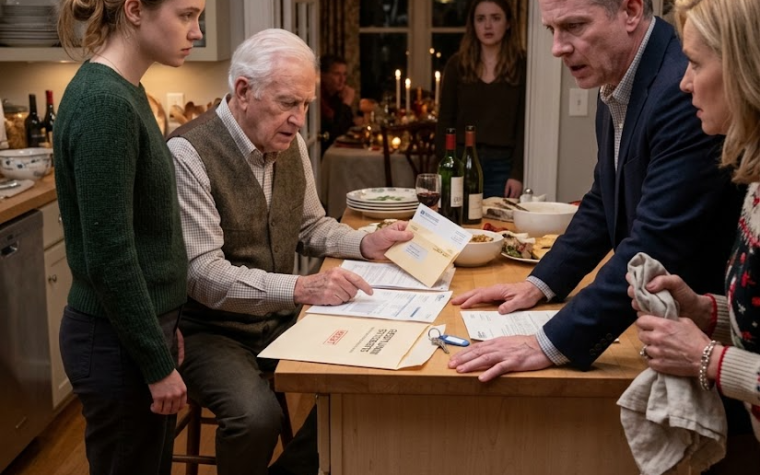
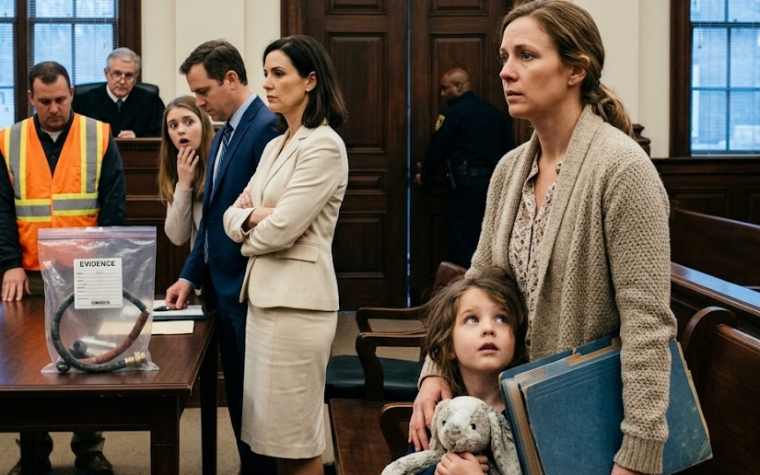
Patricia helped me collect what I needed while Ethan was away.
The baby and I stayed somewhere quiet while I recovered and decided what permanent separation would look like.
Ethan tried every argument he had used before.
He said marriage meant working through mistakes.
He said becoming a father had scared him.
He said he had only wanted one evening without a crisis.
He said I was destroying a family over one bad decision.
I kept returning to the same fact.
One bad decision can still tell you exactly what someone will do when you are helpless and they are inconvenienced.
I spoke with a family attorney.
There was no dramatic courtroom ambush and no magical piece of paper that erased Ethan from our lives.
There were records, statements, dates, messages, and difficult conversations.
The hospital documentation mattered.
The 911 call mattered.
The declined calls mattered.
Ethan’s own messages mattered.
And Patricia surprised him again when she refused to soften what had happened.
When asked what Ethan had told her at the birthday dinner, she answered plainly.
“He said Madison was having a false alarm.
He did not tell me she believed she was in labor.
He did not tell me she had begged him to stay.”
Ethan stared at his mother as though betrayal had finally entered the room.
Patricia stared back.
“You wanted me to be your excuse,” she told him afterward.
“I won’t be your lie.”
Temporary arrangements gave me primary physical care of the baby while Ethan’s time was scheduled clearly instead of depending on his convenience.
He was not erased as a father.
I never asked for that.
But he was no longer allowed to behave as though fatherhood meant arriving only when it fit around the rest of his life.
The marriage ended slowly rather than dramatically.
There were forms.
Meetings.
Divided accounts.
Boxes from closets.
Long silences where apologies once would have pulled me back.
Ethan apologized many times.
Some apologies sounded sincere.
Maybe some were.
But sincerity after a consequence is not the same thing as reliability before one.
Patricia continued seeing the baby.
At first I expected every visit to become another opportunity for her to defend her son.
She never did.
Once, while holding the baby near the window, she said, “He thought choosing me that night proved he was a good son.”
I looked at her.
“What did it prove?”
She glanced down at the sleeping baby.
“That he didn’t understand what either of us needed from him.”
Months later, I stood in another kitchen holding a glass of water.
The baby was asleep in the next room.
For a second, the weight of the glass brought me back to that night—the crash against the tile, my hand on the counter, Ethan’s keys in his palm.
I remembered begging him.
I remembered the door shaking when he slammed it.
Then I remembered something else.
I had gotten myself to that front door.
I had called for help.
Luis had arrived.