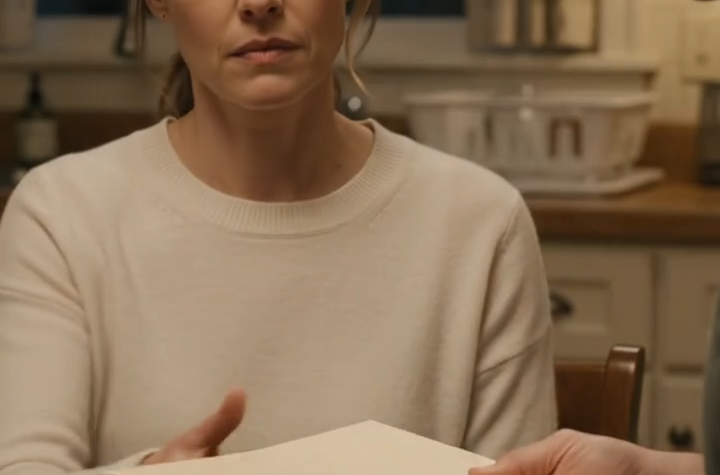
“You do not have to be strong every second,” she said.
“I know.”
It was the first time I truly did.
The months that followed were not simple.
The forensic audit discovered that Daniel had diverted more than four million dollars through layered companies and fabricated contracts.
Some assets were recovered quickly because the board had acted before he could move them again.
The Tribeca penthouse and luxury vehicles were seized during the civil proceedings.
Additional funds were restored through insurance, settlements, and the liquidation of properties connected to the scheme.
Investigators confirmed that Daniel had contacted two medical professionals, but neither had examined me.
One had rejected his request immediately.
The other had exchanged messages about preparing an opinion based only on information Daniel intended to provide.
That doctor lost hospital privileges and faced a professional misconduct investigation.
Daniel was charged with financial crimes related to fraud, falsified records, and the misuse of charitable assets.
Faced with the recovered files, Olivia’s testimony, and his own recorded statements, he eventually accepted a plea agreement requiring imprisonment, restitution, and the surrender of property purchased with foundation money.
His attorneys tried to portray the recording as the bitter work of a discarded mistress.
That argument weakened when digital experts matched his messages to the transfers and recovered deleted instructions from the flash drive.
Olivia was not treated as innocent.
She returned the gifts that could be traced to foundation funds and cooperated with investigators.
Her role was examined, and she faced civil penalties for the documents she had signed.
She wrote me one letter.
She did not ask for forgiveness.
She described the moment at the gala when Daniel thanked her from the stage.
She had believed he was choosing her.
Later, in the private dining room, she realized he was not celebrating love.
He was celebrating control.
I read the letter once and placed it in the case file.
Understanding her did not require welcoming her back into my life.
Daniel contested the divorce, challenged the paternity test, and demanded another after our daughter was born.
The second result matched the first.
He was her biological father.
Biology, however, did not erase the recording in which he plotted to use her existence as a weapon.
The family court reviewed the evidence, his criminal case, and his attempt to fabricate claims about my mental health.
Any future access to our daughter would be determined by strict legal safeguards, not by the authority he once assumed came with his name.
I named her Grace William Harrison Crawford.
Grace, for what I needed during the months after the gala.
William, for the grandfather whose legacy had protected us even after his death.
I kept Crawford in her legal name because I would not teach my daughter that another person’s disgrace could contaminate her identity.
His choices belonged to him.
Six months after the board meeting, I returned to the foundation’s annual hospital funding review.
There were no chandeliers, cameras, or champagne towers.
We met in a children’s rehabilitation center where one of my father’s earliest grants had funded a therapy wing.
Margaret offered me the permanent chair beside her.
I accepted only after the board approved new safeguards: dual authorization for major transfers, independent quarterly audits, direct reporting channels for staff, and public summaries showing how every program dollar was used.
I did not want control simply because I had survived someone who abused it.
I wanted accountability strong enough that no charming man could ever turn trust into private property again.
After the meeting, I stood near a window holding Grace against my shoulder.
Michael joined me with two cups of tea.
“Your father would have been proud,” he said.
I looked down at my daughter’s sleeping face.
“He would have been furious first.”
Michael smiled.
“That too.”
For a long time, I had believed dignity meant enduring humiliation without letting anyone see me break.
I understood it differently now.
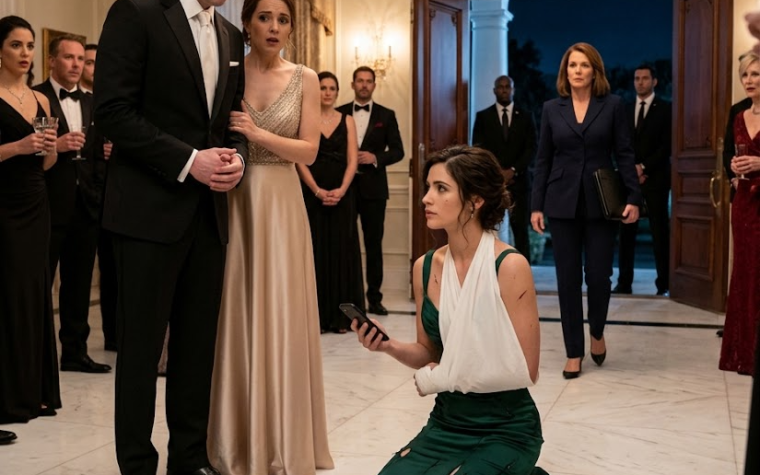
Dignity was walking out of the ballroom.
It was accepting help when my body gave way.