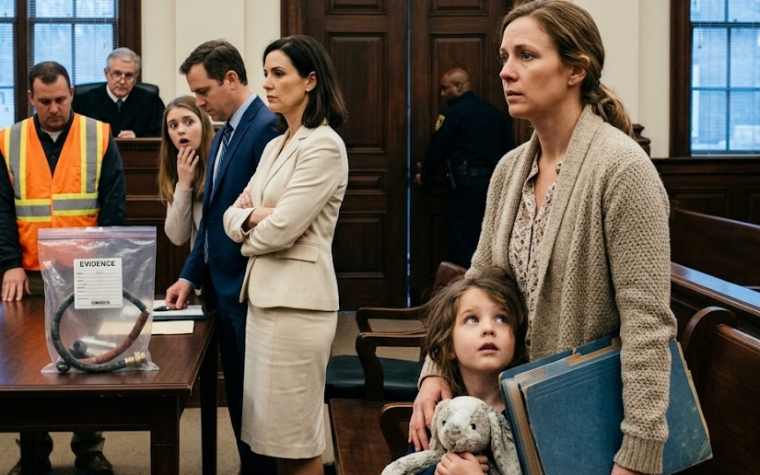
The forensic attorney did not react when Mrs.
Dalton described the transfer.
He asked one question first.
“How did she obtain the documents?”
“They were delivered to her home, left in the marital study, or attached to household statements she was authorized to receive,” Mrs.
Dalton said.
“Nothing was stolen.
Nothing was accessed through a restricted system.”
“Good,” he replied.
“Then preserve everything exactly as it is.”
I stared at Wallace’s signature on the copied page.
The transfer itself was not proof of a crime.
Senior auditors learned early that suspicion was not evidence, and an unusual payment was not automatically an illegal one.
But patterns mattered.
Dates mattered.
Repeated amounts mattered.
And Wallace had built a pattern so clear that I could see its shape even with half the records missing.
The attorney instructed me to save Wallace’s messages, document the frozen card, and write down every threat while the words were fresh.
He would file for temporary support, custody arrangements, preservation of marital assets, and formal financial disclosure.
“Do not enter his accounts,” he warned.
“Do not guess passwords.
Do not confront him with what you suspect.
Let him believe you left without a plan.”
That last part was easy.
Wallace had spent years believing exactly that.
By seven that morning, his family was eating the breakfast I had prepared.
I knew because his mother sent me a photograph of the table with one empty chair.
Her message read, You embarrassed everyone.
Come back before this becomes permanent.
I saved it and did not respond.
At eight, Wallace called.
I let it ring.
At eight fifteen, he left a voice message.
“You need to bring my son home.
You have no right to disappear with him.
If you force me to involve lawyers, you’ll regret it.”
He sounded more irritated than worried.
There was no question about the baby’s health, no request to hear him breathe, no concern about where we had slept.
The attorney saved the recording.
Then he sent Wallace a formal notice stating that our son was safe, that Wallace could communicate through counsel, and that no financial records or electronic files connected to the marriage or family company were to be destroyed.
Wallace called me again less than three minutes after receiving it.
This time, I answered.
“What have you done?” he demanded.
“I hired an attorney.”
“You don’t have money for an attorney.”
“That is not your concern.”
“You’re making this ugly.”
“You came home at 4:30 in the morning and asked for a divorce while I held our newborn.”
His voice lowered.
“Listen carefully.
You were never involved in the company.
You don’t understand how our finances work.
Sign what I send, accept a monthly allowance, and we can avoid humiliating each other.”
I looked across the table at Mrs.
Dalton.
She wrote one sentence on a piece of paper and turned it toward me.