“You threw his children into the rain eight days after his funeral.”
Harold had no answer.
“You hit his son.”
Still nothing.
“You changed the locks on the house Ethan made sure belonged to me.
And now you’re telling me I’m tearing the family apart?”
Eleanor began crying then.
I had seen her cry at Ethan’s funeral, but this was different.
These tears came with fear.
“We were grieving too,” she said.
I looked at the clothes in the mud.
“Grief didn’t throw those bags.”
She lowered her eyes.
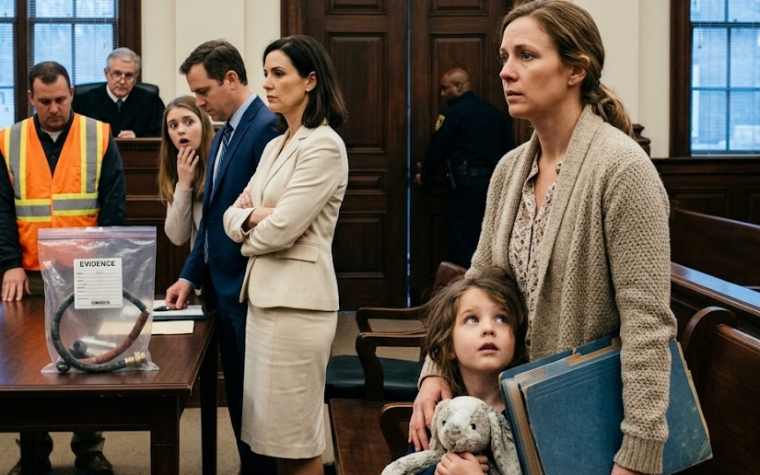
Victoria arranged for a locksmith to restore my access while she remained present.
Harold protested, but his protests became quieter as the certified records were reviewed.
One by one, my children walked back inside.
The twins were the first.
They hurried toward the hallway and stopped as if they expected someone to order them back out.
Nobody did.
My daughters followed.
Jacob carried the baby through the doorway last.
When I stepped inside, Harold was standing exactly where he had been when he told me only real blood belonged there.
I looked at him.
“My children are Ethan’s blood,” I said.
“But that was never really the issue, was it?”
He did not answer.
The issue had always been control.
For years Harold believed his money, surname, and confidence gave him authority over everyone around him.
He had mistaken intimidation for ownership so completely that he never considered what would happen when someone finally checked the paperwork.
Over the following days, Victoria helped me secure copies of every relevant record and advised me to keep communication with Ethan’s parents documented.
Harold did consult a lawyer.
He threatened to challenge the deed.
But threats sounded different once they had to pass through attorneys instead of a dinner table.
The recorded transfer remained intact.
The house was mine.
More importantly, it was my children’s home.
I also addressed what happened to Jacob.
I refused to let the slap disappear beneath the larger property dispute simply because Harold was family.
There were witnesses, and I made sure the incident was documented.
After that, Harold no longer came near Jacob without my permission.
Eleanor sent several messages asking to see the grandchildren.
I did not answer immediately.
I was not interested in revenge, but I was no longer willing to trade my children’s safety for the appearance of family harmony.
When I eventually responded, I gave her clear conditions: respect, no insults, no threats, and no private access to the children until trust had been rebuilt.
She called the conditions cruel.
I thought about the rain.
Then I stopped feeling guilty.
The relatives changed too.
Some apologized.
Some claimed they had not understood what Harold was doing.
A few insisted they had been too shocked to intervene.
I listened without arguing.
But I remembered who had laughed.
I remembered who had watched Jacob get hit.
And I remembered who only found a conscience after the deed appeared.
Forgiveness, I learned, did not require amnesia.