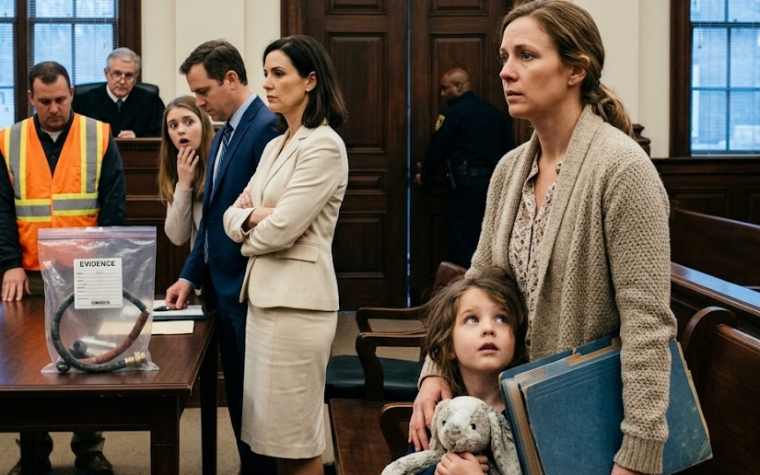
“I prepared for the possibility.”
“That’s the same thing.”
“No.
Planning would have meant deciding to leave while pretending to stay.
Preparing meant admitting that I might one day need to protect myself.”
He looked at me for a long time.
“Were you ever happy?”
The question was almost enough to break me because it was the first one he had asked that was not about money, property, or blame.
“Yes,” I said.
“That is why this hurt.”
His eyes dropped.
For a moment, I saw regret.
Perhaps it was real.
Perhaps he finally understood that he had not lost an uninteresting wife.
He had lost the person who knew how he took his coffee, who remembered his mother’s birthday, who proofread his speeches, who carried the quiet weight of his life while he accepted applause for standing upright.
But regret was not repair.
I signed the settlement.
The divorce became final the following spring.
I changed very little about the apartment at first.
I removed the marble coffee table Asher had chosen and replaced it with an old wooden one from an estate sale.
It had scratches along the surface and one uneven leg.
I loved it immediately.
I painted the bedroom a deep green he once called impractical.
I filled the shelves with novels, student essays, and photographs of people who smiled when I entered a room.
The Morrison twins continued tutoring with me until they graduated from middle school.
Their father referred several other families, and my private teaching work grew enough that I reduced my school hours the next year.
I did not become a different woman overnight.
I still woke early.
I still overprepared lessons and kept emergency cash in labeled envelopes.
I still cooked soft eggs sometimes.
The difference was that I cooked them because I wanted them.
Months after the divorce, I attended another wedding alone.
When the band began, a colleague asked whether I wanted to dance.
My first instinct was to decline.
Then I remembered standing frozen beneath the lights at the Blackwood wedding, waiting for someone else to decide whether I belonged.
I put down my glass and joined the dance floor.
No one laughed.
No one needed to announce my worth.
For years, I believed Asher had made me invisible.
The truth was more complicated.
He had trained me to stand at the edge of my own life, but I had continued standing there because moving felt dangerous.
Leaving did not suddenly make me fascinating, powerful, or fearless.
It simply returned me to myself.
And once I understood that the life Asher claimed as his had been built by my labor, my patience, and my money, I stopped asking whether I had been interesting enough to keep him.
I began asking why I had ever mistaken his attention for proof that I mattered.