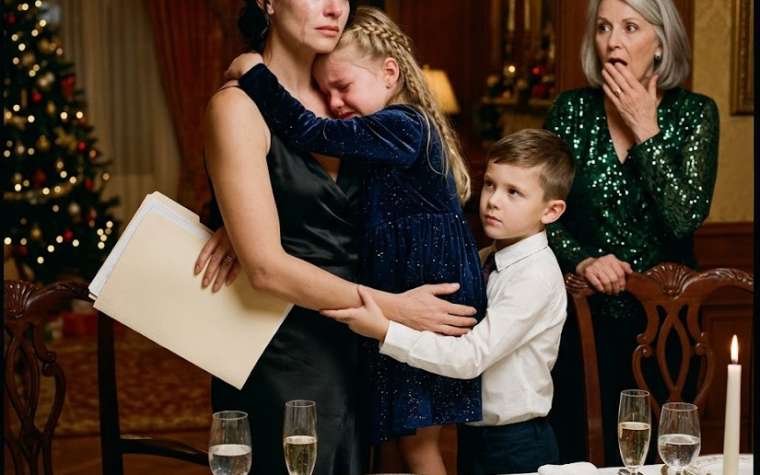
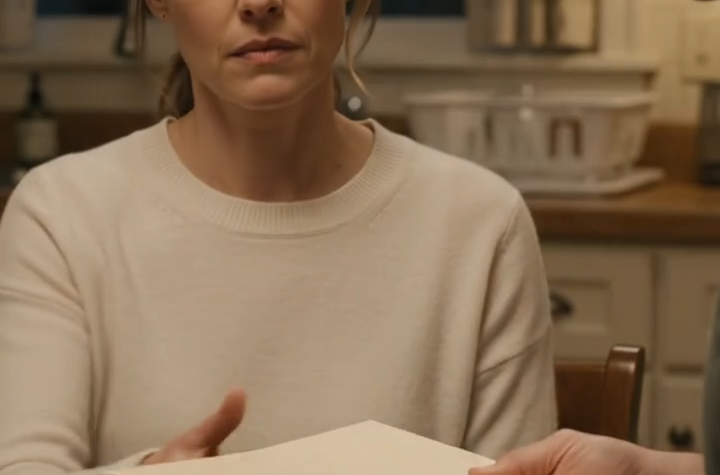
Evelyn said Caleb controlled every account.
Caleb claimed she introduced him to the suspended notary.
Evelyn insisted she had never seen the forged deed until that morning.
The investigator let them speak.
So did my father.
So did I.
Their panic accomplished what months of questioning never could.
They revealed dates, meetings, accounts, and names that had not yet appeared in the files.
When Caleb finally realized it, he stopped mid-sentence.
The investigator closed her notebook.
“Thank you,” she said.
The deputy asked Caleb to turn around.
He looked at me as the handcuffs closed around his wrists.
For years, that look would have frightened me.
It promised punishment later, behind closed doors, where no one could contradict his version of events.
But the doors were open now.
My father stood beside me.
The investigator had the recording.
The deputy had photographed my injury.
The bank had the forged documents.
The board had the ledgers.
Caleb no longer controlled the room, the evidence, or the story.
“You’re my wife,” he said, as though the title were a command.
“Not for much longer.”
His face changed.
The divorce petition had been filed at seven thirty that morning, while the biscuits were in the oven.
My attorney had also requested an emergency protective order based on the assault and the escalating financial threats documented in Caleb’s messages.
A process server waited on the front porch.
Caleb was served before the deputy placed him in the patrol car.
Evelyn watched through the dining-room window.
When the car pulled away, she turned to me with all her old contempt stripped away.
“What am I supposed to do now?”
I gathered the forged deed from the table.
“You should answer the investigator’s questions truthfully.”
“I mean about the family.”
“So do I.”
She left without finishing her coffee.
After the officers departed, the house became quiet again.
The fried chicken had gone cold.
Gravy had formed a skin in its porcelain boat.
A brown stain spread across the tablecloth beneath Caleb’s overturned cup.
My father picked up a biscuit and examined it.
“Your grandmother would say this was too much food for three people.”
“She always said trouble should never find an empty table.”
He smiled, but his eyes filled when he looked at my lip.
“I should have known.”
“No,” I said.
“He worked hard to make sure no one knew.”
I had hidden the worst parts of my marriage because Caleb made every incident seem isolated.
A shove became stress.
A threat became concern.
A locked bank account became responsible budgeting.
When I objected, he called me ungrateful, suspicious, or unstable.
The slap that morning was not the beginning.
It was simply the first time I was ready for it to become evidence.
My father did not ask why I had stayed.