In the second, he promised Vanessa a house and two million dollars after he inherited my assets.
In the third, recorded the night before the yacht trip, Vanessa asked what would happen if the cameras caught them.
Grant replied that he knew where to stand.
He also told her to wear my mother’s necklace.
“She will understand what she lost,” he said on the recording.
“And then she will lose everything else.”
The detectives played only a few seconds in the hospital room.
It was enough.
Grant stopped shouting.
He looked at Vanessa, then at me, then at the navy folder resting on my blanket.
All his calculations had depended on the old will.
He had planned the missing crew, the blind camera angle, the distant flotation ring, and the grieving-husband performance.
He had not checked whether the fortune he intended to inherit was still waiting for him.
Even if I had died, the trust amendment had already moved the assets beyond his reach.
He had tried to murder his wife and unborn child for money that would never have become his.
The older detective read him his rights.
As the officers led Grant into the corridor, he twisted around and looked at me.
“You did this to me,” he said.
My hands were trembling beneath the blanket, but my voice remained steady.
“No, Grant.
You just finally did it in front of witnesses.”
Vanessa was detained before sunset.
She spent the first night insisting she had believed Grant only intended to frighten me.
By the second morning, investigators had recovered their deleted messages.
One message from Vanessa asked whether a seven-month pregnancy would make the death look more accidental.
Another reminded Grant to keep the crew away from the stern.
Her claim of innocence collapsed.
The medical team kept me in the hospital for nine days.
My son’s heartbeat stabilized, but every cramp made me grip the bedrail and remember the ocean closing over my head.
Mateo visited once.
He stood awkwardly near the door holding a bunch of supermarket flowers.
“I should have reached you sooner,” he said.
“You reached me,” I told him.
“That is the only part that matters.”
Captain Elias gave police the yacht’s complete security system.
Along with the stern video, investigators found footage of Grant disabling an automatic man-overboard sensor before we left the marina.
They also recovered his false report about the fuel smell and messages instructing Vanessa where to stand.
The case no longer depended only on my word.
Nine months later, Grant went to trial.
His attorneys called the fall an accident, the recordings fantasy, and the changed will evidence that I had been planning to destroy him.
They suggested I had become emotional after discovering the affair and misremembered a moment of ordinary contact.
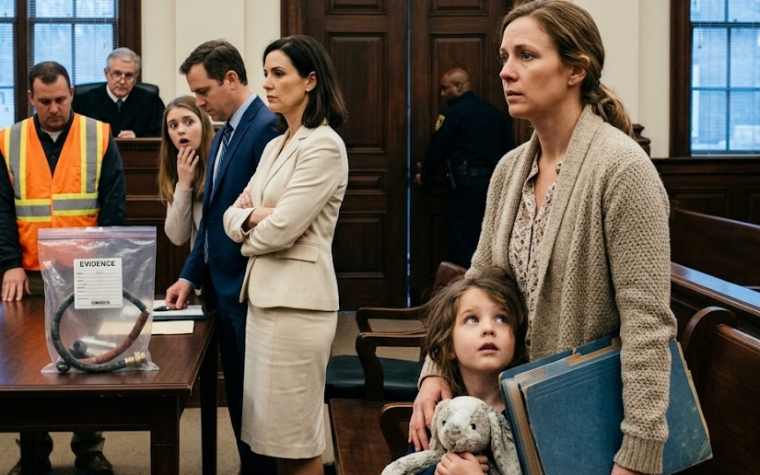
Then the prosecutor played the stern video.
The courtroom watched Grant place his palm against my back.
They watched him push.
They watched Vanessa lean forward instead of recoiling.
They watched the white flotation ring land far beyond my reach.
They watched Mateo appear and Grant block his path.
No speech from an attorney could soften what the camera showed.
Vanessa accepted a plea agreement and testified against him.
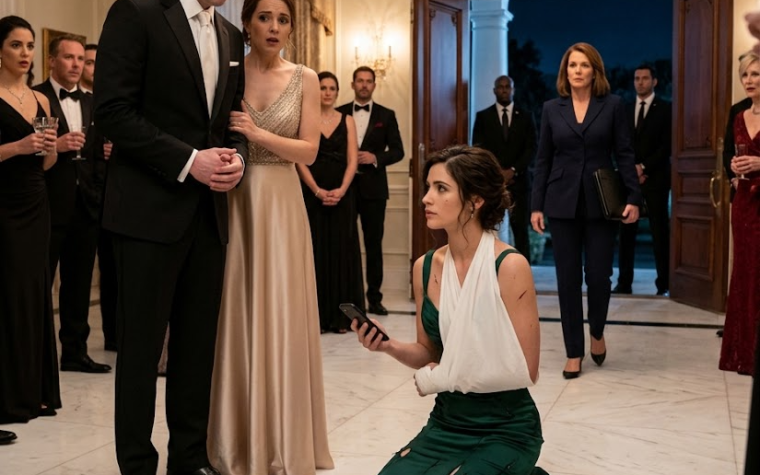
She admitted that Grant had promised her my money and that she had worn the necklace to humiliate me before I died.
She said she laughed because the plan had seemed unreal until my body struck the water.
Her apology came only after she understood she was going to prison.
I did not accept it.
I did not need to.
Grant was convicted of attempted murder, conspiracy, and evidence tampering.
The judge sentenced him to decades in prison.