The office had always discussed the imbalance as though women simply needed more confidence, more visibility, or more executive presence.
Now the chair asked a different question.
Who had been given the uninterrupted opportunities from which confidence and visibility were judged?
The review panel examined project records instead of relying only on impressions from meetings.
It compared credited work with original drafts.
It looked at who had identified risks, built plans, solved failures, and carried decisions through.
Kieran’s record had always been strong.
The room’s memory had been weak.
When the correction came, it did not feel like a gift.
Her leadership responsibility was formally recognized because the evidence showed she had already been doing the work.
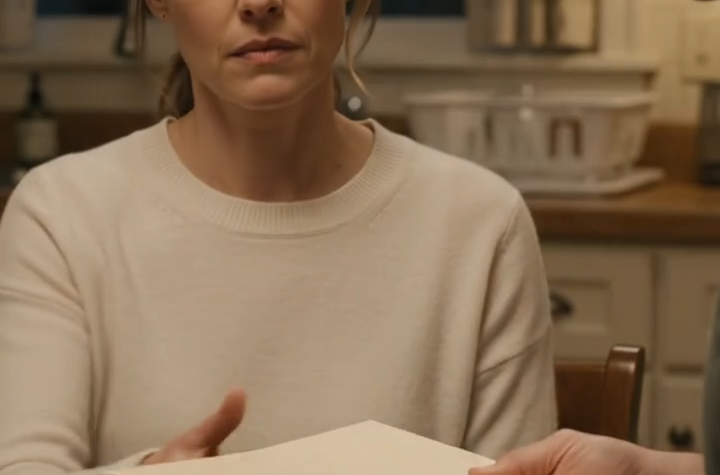
After the announcement, the chair asked her to remain in the conference room.
The folder sat between them again, its corners softened from weeks of use.
“I thought I was running fair meetings,” he said.
Kieran believed him.
That was what made the pattern difficult.
It could survive inside rooms led by people who sincerely believed they were fair.
It needed no villainous plan.
It needed only habits, silence, and a system that trusted memory more than evidence.
“Fairness isn’t something the chair believes,” she said.
“It’s something the room has to produce.”
He nodded slowly.
“I should have heard it before you had to count it.”
“Yes.”
She did not soften the answer for him.
But she did not remain to punish him either.
She gathered the proposal, left the folder on the table for the next review, and walked out with her work credited to her name.
Months later, the meetings sounded different.
Not silent.
Not cautious.
Not free of disagreement.
They sounded complete.
People still challenged one another.
Ideas still changed through discussion.
But interruption was no longer treated as evidence of confidence, and volume was no longer confused with leadership.
When someone was cut off, the room returned the floor.
When an idea reappeared, the room remembered where it began.
When Kieran spoke, she no longer spent half her attention preparing to defend her right to finish.
The solution had never been hidden inside a louder version of her voice.
It had been waiting in the behavior of everyone listening.
She had said it first.
She had always said it first.
Now the room was finally trained to hear her.