Dawson.
That was when the will became more than paperwork.
It became a boundary Jason could not cross simply because she was no longer alive to enforce it herself.
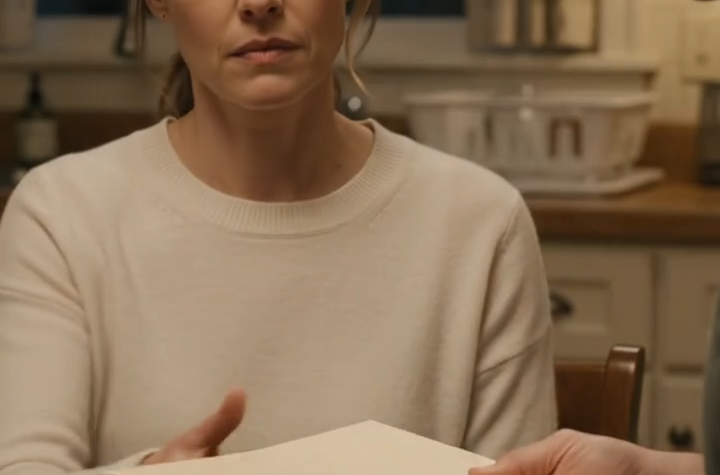
One afternoon, Sarah came to my house carrying a small box of Emily’s things.
Inside were baby shower ribbons, a photograph, two unopened packets of newborn socks, and a handwritten list of nursery items.
I sat at my kitchen table holding those socks until I could no longer see them through my tears.
Sarah sat across from me.
“She wanted to tell you,” she said.
“Then why didn’t she?”
“Because she knew you’d come get her immediately.”
“I would have.”
“I know.
So did she.”
That hurt in a way I had not expected.
Sarah reached across the table.
“She said she needed a little time to put things somewhere Jason couldn’t reach them.”
I thought again about Emily saying, I’m handling things.
For months, I had heard that sentence as distance.
Now I heard courage inside it.
Not the loud kind.
Not the kind that gives speeches.
The kind that saves a receipt, makes a copy, calls a lawyer, gives a trusted friend an envelope, and prepares for the possibility that someone else may someday need to finish what you started.
The investigations and estate proceedings did not restore Emily to me.
Nothing could.
They did not give me the nursery arguments we should have had or the grandchild I should have held.
And there was no single dramatic moment when grief transformed into triumph.
There was only a slow transfer of power.
At the funeral, Jason had controlled the story.
He was the grieving husband.
Emily was the dead wife who could no longer contradict him.
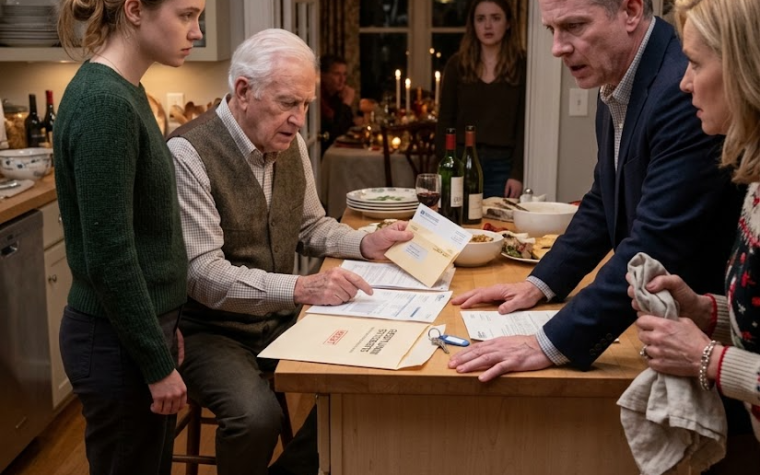
Then her lawyer opened a folder.
Her friend produced an envelope.
Her records began speaking in her place.
After that, Jason no longer got to decide which questions existed.
His claims faced scrutiny.
His access to Emily’s separate assets was limited by the estate plan she had created.
The trust remained protected by independent review.
The evidence concerning his affair, financial activity, and the car service reached people outside his control.
And the image he had carefully built that morning collapsed in front of the very witnesses he had expected to comfort him.
Months later, I returned alone to Emily’s grave carrying white lilies.
For a long time, I simply stood there.
I told her I was sorry I had missed the fear behind her voice.
I told her I was proud of how carefully she had protected what she could.
Then I told her something I had finally come to understand.
Jason had whispered that after the funeral he would be free.
He had believed death meant silence.
Emily had known better.
She had left behind documents, witnesses, evidence, legal barriers, and instructions precise enough to survive her.
Her final act was not revenge.
It was refusal.
She refused to let betrayal become ownership.
She refused to let confidence become truth.
She refused to let the man who underestimated her be the only person left to tell her story.
At her funeral, I had walked in believing I was there only to say goodbye.
Instead, I watched my daughter speak one last time through everything she had prepared.
And the man smiling beside her coffin finally understood what she had known before she died.