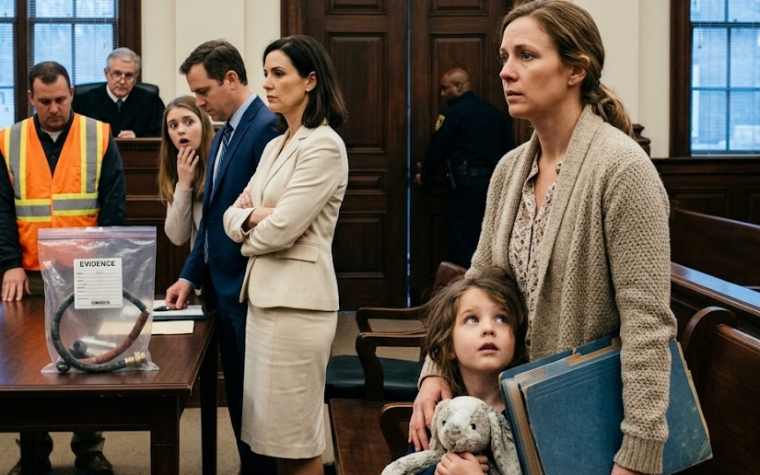
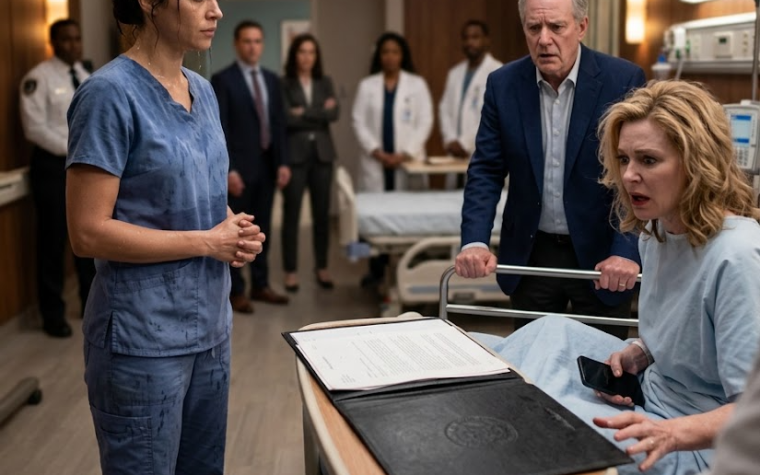
Eventually, he entered a plea that required restitution, probation, financial monitoring, and community service.
Missing a payment could bring him back before the court.
Dad blamed me for every expense.
Mom left voicemails saying Liam’s future had been ruined over “a misunderstanding.”
Neither of them mentioned my ruined books, my night in the staff lounge, or the years of savings they had watched him take.
Naomi advised me not to argue with them.
I changed my number instead.
The hardest part was not losing the money temporarily.
It was recognizing how quickly the people I loved had rearranged the truth once I stopped being useful.
For weeks, I woke expecting to hear Mom calling from the hallway or Dad asking me to cover another bill.
In the studio apartment, there was only the hum of the refrigerator and the distant sound of traffic.
At first, the silence frightened me.
Then it began to feel like peace.
I replaced my damaged nursing books.
I hung Aunt Evelyn’s photograph above the small desk by the window.
The crack in the frame remained, but I kept it that way.
It reminded me that damage did not always reach the thing inside.
With Naomi managing the recovered funds, I enrolled in the graduate nursing program I had postponed twice because my family always needed money.
The trust paid the tuition directly, exactly as Aunt Evelyn intended.
On the morning of my first class, Naomi gave me a sealed envelope Aunt Evelyn had left with the trust documents.
The letter inside was brief.
Aunt Evelyn wrote that she hoped I would never need the protections she had created.
She also wrote that kindness without boundaries eventually becomes permission.
Her final line said, “Do not confuse being needed with being loved.”
I sat in my car outside the university and cried harder than I had cried in the kitchen.
Not because Liam had betrayed me.
Because Aunt Evelyn had understood me well enough to protect a future I had nearly given away.
Months later, Liam made his first restitution payment.
There was no apology attached.
I did not require one to move forward.
The money returned gradually.
My credit remained intact.
My family no longer had access to my accounts, my mail, my room, or my time.
At the hospital, I continued working with babies whose entire lives could change between one monitor alarm and the next.
The work was still exhausting.
Some shifts still lasted fourteen hours.
But now, when I came home, no one had packed my belongings.
No one had claimed my bed.
No one was waiting at the kitchen table to tell me what my sacrifice was worth.
One evening, I placed my new ATM card in a locked drawer beneath Aunt Evelyn’s photograph.
Then I made tea, opened my graduate textbook, and sat by the window while cold rain moved across the glass.
For the first time, the storm was outside.
And I was home.