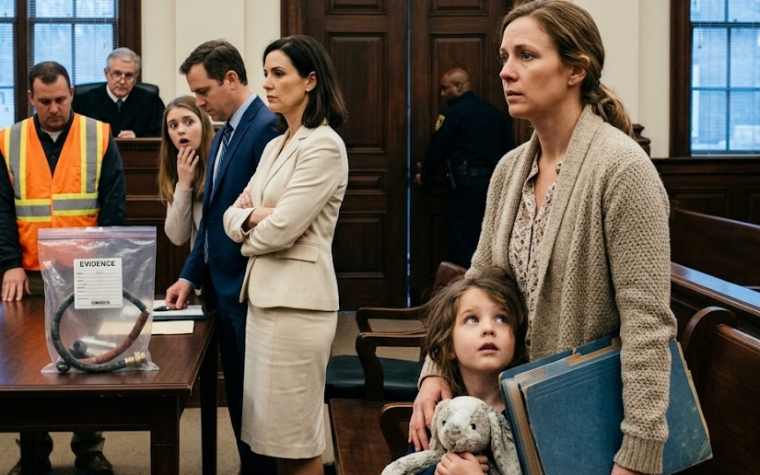
The attorney explained that no one would be physically removed without proper legal process.
Eleanor had no interest in staging the kind of expulsion Richard had attempted.
For that night, however, Richard was asked to use one of the guest suites and stay away from Eleanor’s private rooms.
The home’s security codes and access permissions would be documented, not secretly changed.
An inventory would begin the next morning.
Richard objected to every condition until the attorney reminded him that the email, the threatened disposal of Eleanor’s possessions, and Chloe’s presence could all be presented during an emergency hearing if he interfered.
He finally went upstairs alone.
The next morning, the storm had passed.
Lake Michigan appeared steel gray beyond the gardens.
Eleanor sat at the breakfast table with the property records arranged in front of her.
For years, she had managed Oak and Iron from a modest home office Richard rarely entered.
The work he dismissed as “typing” included supervising investments left by her great-aunt, reviewing maintenance contracts, and protecting the estate’s reserves.
She had never needed Richard’s salary.
She had simply loved him enough to let him believe his contributions mattered.
That realization became the most painful part of the betrayal.
He had not discarded a dependent wife after discovering she was helpless.
He had discarded a loyal one because he believed she was helpless.
By noon, Richard’s professional crisis had worsened.
Kensington’s compliance team requested explanations for entertainment expenses connected to evenings he had spent with Chloe.
Some charges were legitimate client development.
Others were not.
His messages with Chloe also revealed discussions about bringing clients to the Lake Forest estate and presenting it as evidence of his personal wealth.
The firm placed both of them on administrative leave while it investigated.
Richard blamed Eleanor again.
She showed him her phone records.
There were no calls to Kensington.
“Not every consequence comes from me,” she said.
“Some come from you.”
During the first divorce conference, Richard arrived with the posture of a senior executive and demanded compensation for the years he had “funded” the estate.
The accounting records told a less flattering story.
His $4,500 transfers had indeed paid meaningful household costs, but Eleanor’s company had covered property taxes, major renovations, structural repairs, insurance, staff, and landscaping expenses far exceeding his contribution.
The mansion had been inherited before the marriage and remained held separately.
Richard’s name had never appeared on the deed, the company, or any ownership document.
He had possessed prestige, not property.
His attorney advised him to stop making public claims that he owned the estate.
Richard ignored that advice.
At the country club, he told acquaintances that Eleanor had hidden assets and defrauded him.
Unfortunately for him, several members remembered years of hearing him boast that a relative allowed them to live in the house.
His own stories contradicted his new accusation.
One man quietly asked whether Richard had ever seen a lease.
Richard stopped going to the club.
Chloe cooperated with Kensington’s investigation.
She produced messages in which Richard promised her a life in the mansion, described Eleanor as financially useless, and suggested that hosting wealthy clients there would strengthen his image.
The firm concluded that Richard had misrepresented personal assets in professional settings and improperly submitted several expenses.
The violations were not criminal, but they were incompatible with the judgment expected from a senior vice president.
His promotion was withdrawn.
Weeks later, his employment ended under a confidential separation agreement.
Chloe also lost her position after the review found her involvement in the expense violations.
She and Richard did not remain together.
Their relationship had depended on admiration, secrecy, and the fantasy of a shared ascent.
Once the title, mansion, and glamour disappeared, little remained.
Richard moved into a furnished apartment outside the city while the divorce proceeded.
The first time he visited to collect personal belongings, Eleanor met him in the foyer with an inventory sheet.
She wore the same plain cashmere sweater he had once mocked.
He looked toward the kitchen.
“Do you ever think about how different this could have been?”