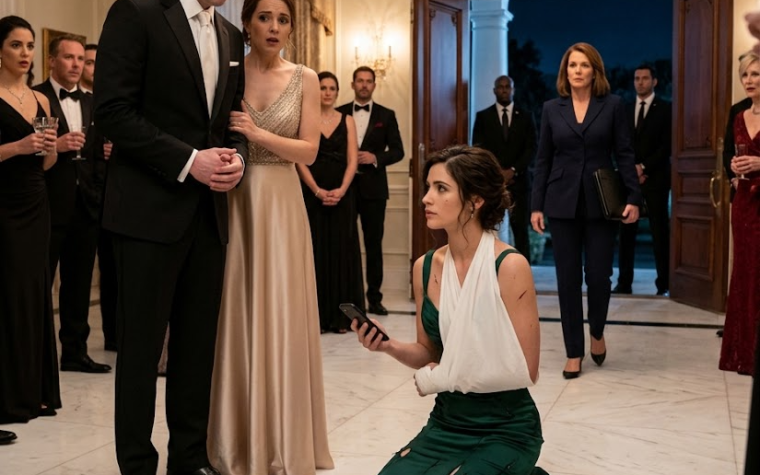
That small gesture changed something in her face.
She had arrived believing she was standing beside the winner.
Now she was watching the version of Jason I had known for years emerge whenever he lost control.
The judge called for order and addressed both sides.
She made clear that the court was not deciding every allegation that morning.
The scars did not automatically determine ownership.
The affair did not automatically award me a company.
And accusations, however serious, still required proper examination.
But neither would she allow Jason to use the timing of the drained accounts and the apparent concentration of assets as a weapon to make meaningful review impossible.
She ordered that the disputed financial position be preserved while the records were examined.
Jason stared at her.
“You can’t freeze me out of my own company.”
His attorney closed his eyes for half a second.
The judge’s voice became colder.
“Mr.
Mitchell, this court has not awarded your company to anyone.
It has ordered preservation while ownership and financial conduct are reviewed.
I suggest you stop confusing control with entitlement.”
A reporter’s pen moved rapidly across a notebook.
Jason heard it.
He looked toward the gallery and finally seemed to understand that the room contained witnesses he could not dismiss when he got home.
His humiliation was no longer private.
Neither was mine.
That realization should have frightened me.
Instead, I felt something I had not expected.
Relief.
For ten years, secrecy had always protected Jason more than it protected me.
That morning, secrecy ended.
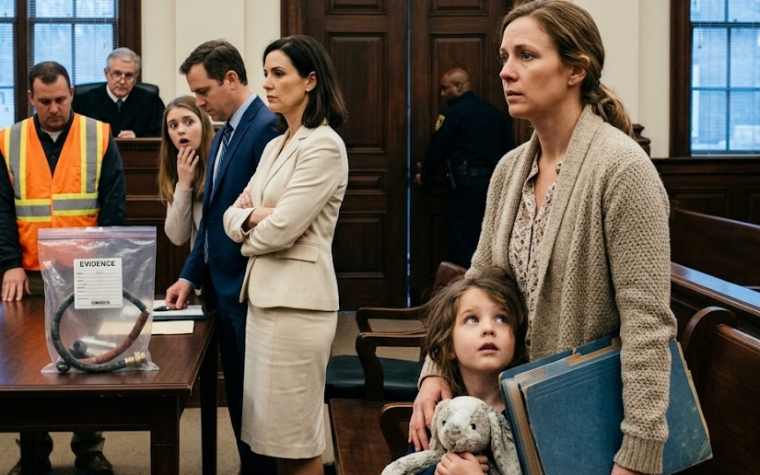
Daniel asked permission to address the hotel receipts one final time because Jason’s side had characterized them as irrelevant.
He explained that their significance was not moral outrage over an affair.
Their significance was that my identity had been used on records connected to conduct I had not participated in.
Madison spoke before Jason could stop her.
“He told me it didn’t matter.”
The courtroom froze.
Jason turned toward her.
“What are you doing?”
Madison swallowed.
“You told me Iris never looked at any of it.”
Jason’s attorney stood.
“Ms.
Brooks, do not volunteer statements.”
But the damage was done.
The judge looked at Madison.
Daniel looked at Jason.
I remained still.
Jason had spent years counting on everyone around him to maintain the version of events most useful to him.
Now even Madison had contradicted him because panic made her careless.
He leaned toward her and hissed something too low for most of the room to hear.
She pulled farther away.
The judge warned him not to communicate with a potential witness about testimony in the courtroom.
That word—witness—hit him harder than anything else had.
Madison was no longer merely the woman on his arm.
She was someone who could describe what Jason told her about using my name.
His confidence finally broke.
“Iris,” he said, looking directly at me.
“We can talk about this.”