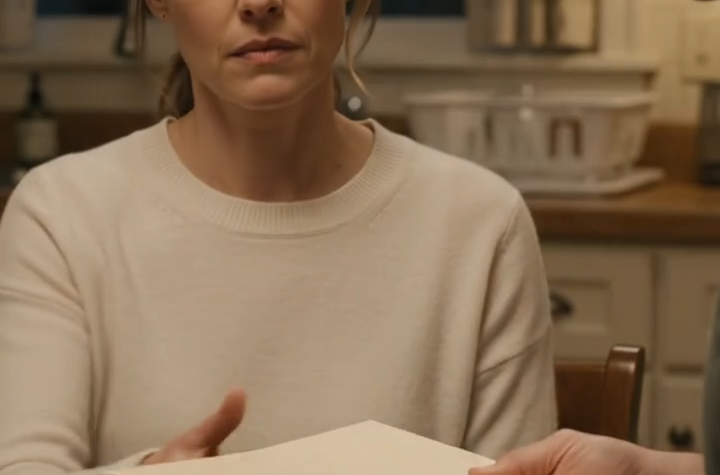
Clara stared at the messages for a long time.
“He never asked if the baby was alive,” she said.
No one in the room had an answer for that.
Thomas sent formal notices to the Garcia family’s attorney, the company that maintained the home’s security system, and the service that stored its cloud backups.
The notices demanded that no video, access record, staff schedule, message, or device data be destroyed.
The Garcia response arrived before noon.
Their attorney claimed Clara had suffered an unfortunate fall after becoming emotionally distressed.
He suggested she had secretly recorded a private family discussion, misunderstood harmless remarks, and left before anyone could assist her.
Thomas read the letter once.
Then he placed it facedown.
“They wrote that before asking what evidence we have,” he said.
“That means they are not investigating the truth.
They are choosing a version.”
By afternoon, William’s mother called Clara directly.
Her voice was smooth and controlled.
She said everyone was worried.
She said Tabitha could be forceful but would never intentionally harm a pregnant woman.
She said public accusations could damage William’s medical career and create stress that was unhealthy for the baby.
Clara listened without speaking.
Then William’s mother offered to send a private physician and suggested Clara recover at a family-owned property where the press would not find her.
Thomas wrote every word down.
When the call ended, Clara asked, “Was she offering to help me or hide me?”
“Both,” I said.
“That is how people like them make the hiding sound generous.”
The next morning, investigators visited the Garcia home.
The local security console showed no usable footage from the service staircase.
William told them the system had malfunctioned overnight.
The cloud provider told a different story.
The camera had recorded normally.
Seventeen minutes after Clara left, someone using Tabitha’s personal access code deleted the relevant clip from the household console.
The deletion did not remove the encrypted backup already transmitted to the provider’s server.
The recovered footage had no sound, but it did not need any.
It showed Clara standing near the staircase with her hands away from Tabitha.
It showed Tabitha advancing.
It showed William watching from several feet away.
Then Tabitha placed both hands against Clara’s upper body and shoved.
Clara disappeared down the staircase.
William took one step toward the stairs, stopped, and looked toward the hallway.
Tabitha pointed at the security camera.
William walked out of view in the direction of the control room.
For more than two minutes, neither of them went down to help Clara.
When confronted with the footage, Tabitha claimed she had only tried to guide Clara away and that Clara lost her balance.
William said the camera angle was misleading.
Then investigators played the audio.
Tabitha’s attorney ended the interview.
The Garcias changed strategies.
A private public-relations consultant began calling people who knew Clara.
Old classmates were asked whether she had ever been unstable.
Former coworkers were asked whether she exaggerated.
Someone contacted the charity where Clara volunteered and hinted that she had manufactured a family dispute for money.
The cruelty no longer happened in a staircase.
It happened through polite phone calls and careful questions.
Clara almost broke when the director of the charity asked her to step back temporarily until the situation became clearer.
“They still believe them,” she said.
“Some do,” Thomas replied.
“Others are simply afraid of choosing before wealth tells them which choice is safe.”