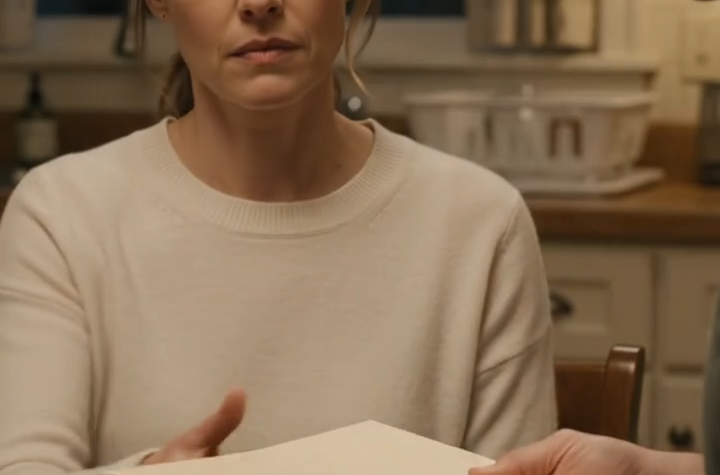
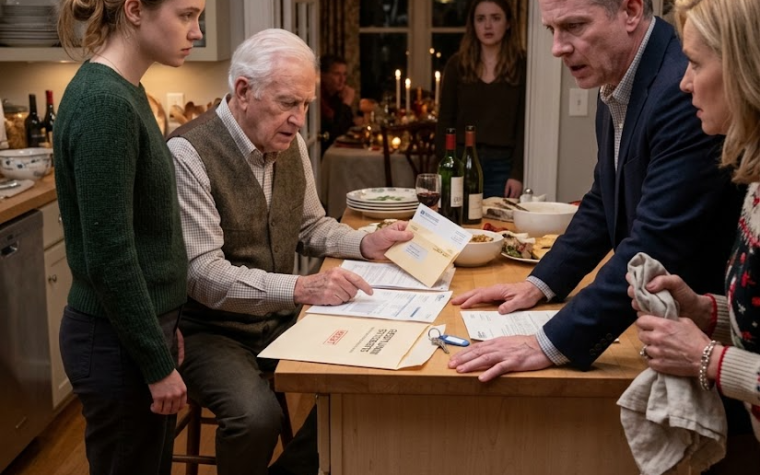
“No,” she said.
“It’s corrected.
That’s different.”
The property case resolved months later.
The county withdrew its attempt to clear the land under the disputed notices, and the quitclaim deed her son had tried to make her sign became evidence in the civil proceeding rather than the instrument that took Bell’s away.
A later settlement compensated Lenora for portions of the loss tied to her wrongful conviction and mishandling of her case.
It was not fourteen years returned.
Nothing could return those.
Money could not give Earl back to her.
It could not erase prison winters or restore birthdays she had watched through photographs.
It could not turn her son into the young man he had been before fear and cowardice became choices.
But it did something Lenora understood.
It gave her options.
She used part of the settlement to clear the property taxes and stabilize the station roof.
She did not reopen the gas pumps.
The bypass had made that dream foolish long ago.
Instead she repaired one service bay and leased it cheaply to a young local mechanic.
She cleared most of the junk lot, kept Earl’s original workbench, and restored the office one piece at a time.
The black rotary phone stayed exactly where it was.
Her son began visiting on Saturdays.
At first, Lenora gave him jobs instead of conversation.
Pull weeds.
Haul scrap.
Replace the broken window.
Paint the service door.
He accepted every task without complaint.
Months passed before she let him drink coffee with her behind the counter.
Even then, forgiveness did not arrive as one grand moment.
It came in smaller things.
The day he returned Earl’s socket set that he had taken years ago.
The afternoon he admitted, without excuse, that fear had not forced him to lie; fear had only made lying easier.
The morning Lenora finally said, “Your father would’ve been furious with you.”
Her son nodded.
“I know.”
Then she added, “He would’ve still made you help fix the compressor.”
Her son laughed through tears.
That was the first time she laughed with him again.
The following spring, Lenora replaced the missing letters on the old station sign.
Bell’s Service & Gas was not really a gas station anymore, but she restored the full name anyway.
People in Red Creek began stopping by.
Some apologized for believing the prosecution.
Some avoided discussing it.
Some acted as though they had always suspected Lenora was innocent.
She learned not to argue with memory when memory was trying to protect somebody’s pride.
She had spent enough of her life in rooms where other people decided what the past meant.
One evening, after the mechanic had gone home and the frontage road was quiet, Lenora sat alone behind Earl’s old desk.
The repaired window was open.
Warm wind moved through the office instead of March cold.
On the wall, the rotary phone rang.
Lenora looked at it and smiled.
The line was ordinary now.
Mara had arranged for service to remain connected after joking that a telephone with such timing deserved retirement benefits.
Lenora picked up.
Her son’s voice came through.
“You need anything from town?”
She looked around the station.