And Daniel had signed beneath it.
The visiting judge entered.
Everyone rose again.
This time, when we sat, there was no laughter behind Daniel.
His attorney began with the calm voice of a man trying to restore control.
He described the marriage as irretrievably broken.
He said both parties had negotiated voluntarily.
He said the signed agreement should be approved without unnecessary delay.
Then my attorney—one of the few professional contacts who had known I was returning to practice—stood and asked the court not to approve it.
Daniel turned sharply toward me.
Margaret whispered, “What?”
The judge asked why.
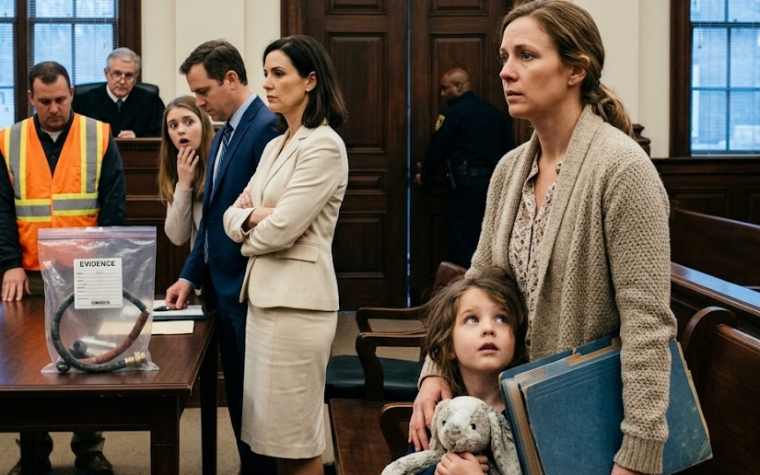
My attorney placed the first exhibit on the table.
Bank transfers.
Not one transfer.
Twenty-three.
They had moved money from accounts disclosed as marital assets into consulting entities that did not appear anywhere in Daniel’s sworn statement.
The transfers began shortly after Daniel’s affair with Lillian became serious.
Some were small enough to disappear among ordinary business transactions.
Others were not.
Daniel’s attorney asked for a moment to review the documents.
The judge gave him one.
His face changed before the minute was over.
Daniel noticed.
“What is it?” he whispered.
His lawyer did not answer him.
The next exhibit showed ownership records connecting one of the receiving companies to an associate who had attended private meetings with Daniel and Lillian.
Then came emails.
Daniel had written carefully, but not carefully enough.
In one message, he instructed that certain payments be completed before the divorce filing.
In another, he told Margaret that I would “take the house and disappear” once the agreement was signed.
Margaret had replied that I should be grateful for anything.
Lillian’s name appeared later in the chain.
She wanted to know when she could begin redecorating the main residence.
The same residence Daniel had repeatedly claimed was not connected to the marital estate in the way my lawyers believed it was.
Lillian leaned forward.
“That email proves nothing.”
The judge looked at her.
Daniel’s attorney closed his eyes for a second.
Lillian realized too late that nobody had invited her to speak.
She sat back.
I said nothing.
My restraint was no longer confusing them.
Now it was suffocating them.
The judge asked whether there was additional evidence.
There was.
Security footage from one of the Crosswell offices showed Daniel and Margaret entering after business hours on dates corresponding with several large transfers.
A recording captured Daniel discussing the timing of asset movements.
It did not contain some theatrical confession.
Real evidence rarely does.
It contained something better: details.
Account references.
Amounts.
Dates.
Instructions.
The kind of ordinary language people use when they believe nobody dangerous is listening.