Grant had been preparing.
The dinner was only the final performance.
I pulled out the next document.
That was when Grant stopped pretending not to understand.
“Where did you get that?”
Nobody at the table missed the change in his voice.
Sloane turned toward him.
“Get what?”
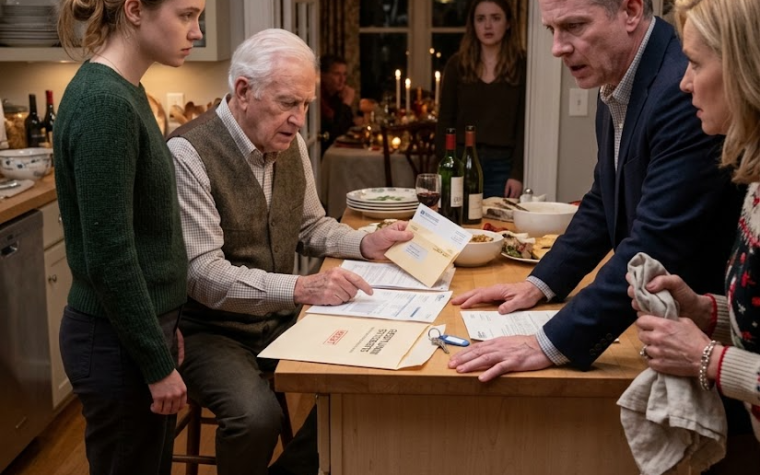
I placed the document flat on the table.
“The proposed transfer of voting shares.”
The board members leaned closer.
Grant reached for it.
I put my hand over the page before he could take it.
“No.”
It was the first time all evening I had raised any resistance stronger than a quiet sentence.
He froze.
“Those are corporate documents,” he said.
“They concern shares registered in my name.”
Sloane looked between us.
“Grant?”
He ignored her too.
I continued.
“You tried to move voting authority without discussing it with me.”
“That’s not what happened.”
“Then tell everyone what happened.”
Silence.
One of the board members reached out.
“May I?”
I slid him the copy.
He read it slowly.
Grant sat down at last, but not because he had relaxed.
His knees seemed to have made the decision for him.
The board member turned a page.
“Was this executed?”
Grant answered immediately.
“It’s preliminary paperwork.”
“That wasn’t my question.”
Grant’s father closed his eyes.
I watched Sloane carefully.
The smug certainty had vanished from her face.
Until that moment, I think she had believed Grant controlled everything: the company, the money, the room, the marriage, even the story people would tell afterward.
She had no idea that the shares he was discussing belonged to me.
“The authorization requires Clara’s consent,” the board member said.
Grant leaned forward.
“There are mechanisms for restructuring voting rights.”
“With proper authorization.”
“Which we were working through.”
I finally spoke.
“You weren’t working through anything with me.”
Grant looked directly at me.
The public mask slipped.
“You never cared about this part of the business.”
There it was.
Not denial.
Entitlement.
I nodded once.