The baby began crying from the nearby crib.
Maya opened her eyes at the sound and immediately tried to sit up.
“He needs me.”
“No,” I said.
“He needs an adult.
You need help.”
I carried her to the sofa where she could lie flat, then brought the baby close enough for her to see that he was safe.
She watched me check his bottle and blanket with a concentration no child should have developed.
Only when he quieted did she let her eyes close.
I called emergency services and reported exactly what I had seen: food deprivation, forced childcare, physical assault, and a child struggling to remain conscious.
Isabella’s calm finally cracked.
“You called the police?”
“I called for medical help.”
“You are going to destroy this family over one misunderstanding.”
“You destroyed it when you made my daughter afraid to ask for bread.”
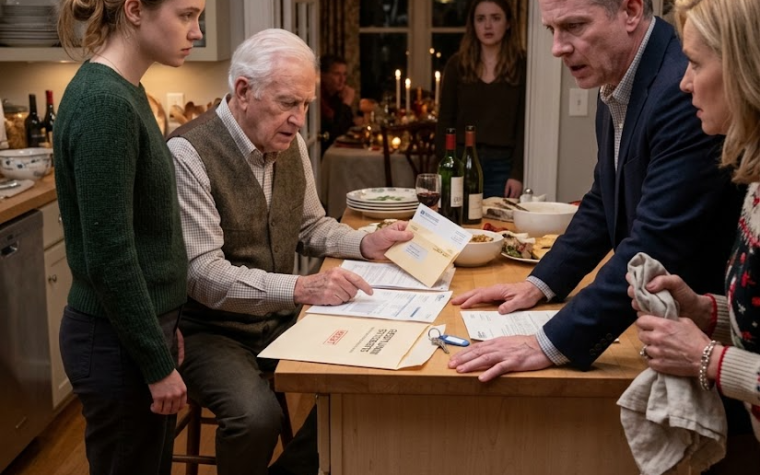
She grabbed the pantry key from her bracelet and unlocked the door.
Shelves of food stood untouched inside.
“Look,” she said.
“There is plenty here.”
I stared at her.
The abundance made the cruelty worse.
Maya had gone hungry ten feet from enough food to feed her for months.
Isabella began moving quickly around the kitchen.
She put the bread bag on the counter, opened the refrigerator, and removed fruit as though arranging evidence of a generous household.
The cameras recorded every movement.
“You should think carefully,” she said.
“People know me.
They know the work I do.
They know how much I care about children.”
I remembered standing beside her at charity galas while cameras flashed.
I remembered donors thanking her for speeches about compassion.
The woman in those photographs had never existed inside our home.
“The cameras know you too,” I said.
She looked toward the small lens above the doorway.
For the first time, she seemed to understand that her performance was over.
The paramedics arrived first.
They examined Maya on the sofa, checked her pulse, and asked when she had last eaten a full meal.
Maya looked at me before answering.
“Yesterday at school.”
It was the first time I learned that Isabella had been withholding more than one meal.
The paramedics recommended immediate evaluation for dehydration, exhaustion, and muscle strain.
When they asked Maya to stand, her legs shook.
I stayed beside her while one of them supported her other arm.
Isabella tried to follow us toward the front door.
A police officer stopped her in the hallway.
She immediately changed her voice.
“There has been a terrible misunderstanding,” she said softly.
“My stepdaughter is having difficulty adjusting to her brother.”
The officer asked whether she had struck Maya with the wooden spoon.
Isabella looked at me.
“I barely touched her.”
It was the first admission she made.
The officer asked again.
“Did you strike her?”
“I was correcting her behavior.”
The camera above the hallway captured that answer too.