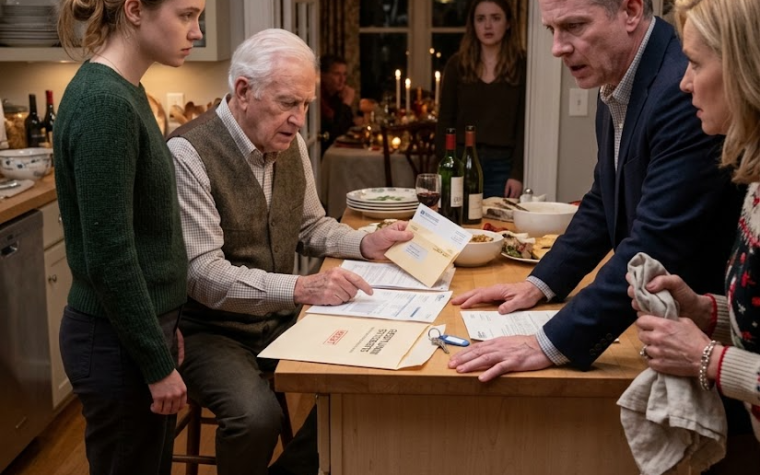
Eleanor was one of them.
Company records showed that she had requested a copy two days before visiting Madeline.
The mailroom logs were worse.
My mother had used her authority as my family representative to create a private instruction: correspondence from Madeline Hayes was to be routed directly to her.
Five letters had been intercepted.
I read all five.
The first was frightened but hopeful.
The second contained an ultrasound photograph.
The third said doctors had confirmed triplets.
The fourth was written after their birth.
Madeline described three premature but healthy children and asked me to meet them before deciding anything.
The fifth contained only one paragraph.
I do not know whether you are reading these.
I need to believe the man I loved would at least tell me no with his own voice.
My mother had written return to sender across the envelope.
When confronted with the records, Eleanor stopped denying that she had intercepted the letters.
Instead, she defended the decision.
She told the company’s outside investigators that Madeline had represented instability, scandal, and financial exposure.
She claimed I would have abandoned an important financing agreement if I learned about the pregnancy.
Then she made the mistake that ended any chance of protecting herself.
She admitted she had created the letter because Madeline “would not accept reality without Arthur’s signature.”
The investigators asked whether I had authorized it.
Eleanor said no.
Her admission was recorded.
The board removed her from every formal and informal role.
Her access to company offices, records, accounts, and staff was revoked.
I disclosed the misconduct to our lenders and directors rather than allowing rumors to expose it later.
The company survived, but there was a cost.
Investors questioned my judgment.
Reporters gathered outside the headquarters.
For several weeks, the empire I had spent my life protecting seemed capable of cracking under the weight of one forged page.
I accepted that risk.
Madeline had carried a far greater one alone.
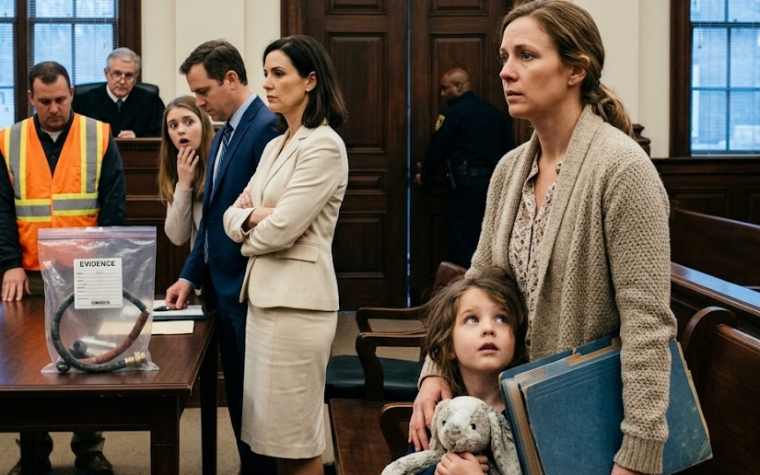
Her attorney filed a civil claim against Eleanor for fraud, intentional interference, and the financial damage caused by the false letter.
The evidence was overwhelming: the copied signature, intercepted mail, bank records, witness statement, and Eleanor’s recorded admission.
The court ordered restitution for the housing and medical losses Madeline had suffered after the payments were withdrawn.
A separate support arrangement for the children was approved under independent supervision, with no secrecy clause and no control retained by my family.
The criminal case ended months later with Eleanor pleading guilty to forgery and falsifying business records.
Because she had no prior convictions, she avoided prison, but received probation, substantial restitution, and a court order prohibiting contact with Madeline or the children.
She called me the night before entering her plea.
I almost ignored the call.
Then I answered because I needed to hear whether she understood what she had done.
“I loved you,” she said.
“You loved the version of me you could control.”
“I made one mistake.”
“You made it every day for five years.”
Her voice cracked.
“Are you throwing away your mother for that woman?”
I looked across the apartment where the children were asleep after their first supervised evening visit with me.
“No,” I said.
“I’m refusing to throw them away for you.”
I ended the call.
Madeline did not forgive me when the DNA results arrived.
She did not move into my home, accept a diamond, or allow guilt to turn us into an instant family.
She made boundaries.
I followed them.