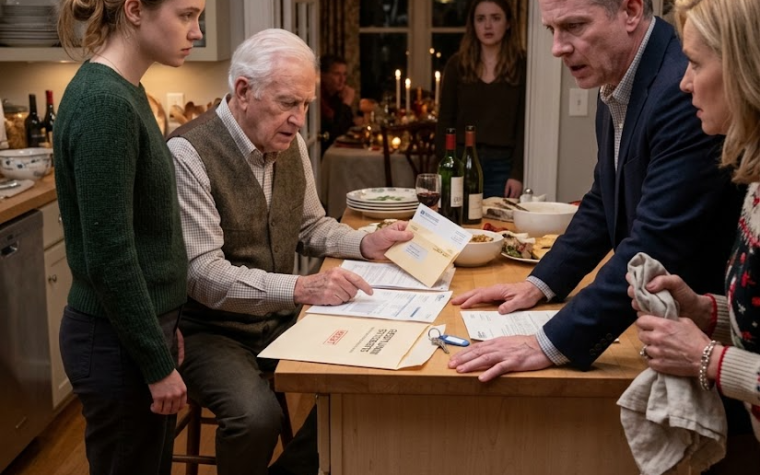
Still, she denied everything.
She claimed Daniel created the company without her knowledge.
She said he handled her banking.
She insisted the notebook referred to household budgeting.
Then investigators found an email she had sent Daniel after I refused her demand.
It told him to move the five thousand dollars before I had time to “throw another fit.”
Daniel began blaming her within hours.
He told detectives that Margaret had pressured him for years.
He said she threatened to expose his failed real-estate ventures and embarrass him at the country club if he stopped sending money.
Some of that may have been true.
But pressure did not explain the forged signature on my authorization form.
It did not explain the copied insurance document stored on his laptop.
It did not explain why he had looked at the floor while his mother threw plates near my chair.
He had made choices.
So had I.
That evening, I returned to the house Daniel and I shared, accompanied by my attorney and a locksmith.
Daniel had not been formally barred from the property, but the financial evidence made it unsafe to leave my records accessible.
I changed the locks on my home office and removed every clinic file.
His expensive coffee machine still sat on the kitchen counter.
His pressed shirts hung in the bedroom.
A real-estate magazine lay open beside the sofa as though he might walk in at any moment and resume the life I had funded.
On the dining table, I found a note in his handwriting.
“Evie, please don’t let one mistake destroy eight years.”
One mistake.
I placed the note in an envelope for my attorney.
Over the following weeks, the investigation widened.
A bank employee confirmed that Daniel had presented himself as an active financial officer for my clinics, although he held no such position.
A former bookkeeper remembered him insisting that the Hale payments were confidential because they involved “executive strategy.” Electronic records showed repeated access to my archived signature files.
Margaret tried to control the story around Maple Ridge.
She told friends that I had called the police because she requested help paying for a vacation.
She described me as vindictive, unstable, and obsessed with money.
For a few days, some people believed her.
Then the country club suspended her membership after investigators requested billing records connected to the false reimbursements.
The image she had protected so fiercely began collapsing under the weight of receipts.
Daniel called me repeatedly from unfamiliar numbers.
I did not answer.
Finally, he sent an email through his lawyer.
He apologized for “poor financial judgment” and asked whether I would consider counseling before filing for divorce.
My attorney asked how I wanted to respond.
I read his message twice.
There was no apology for the forged documents.
No apology for allowing Margaret to scream at me.
No apology for standing beside her while glass shattered against the wall.
He regretted the consequences, not the betrayal.
I filed for divorce.
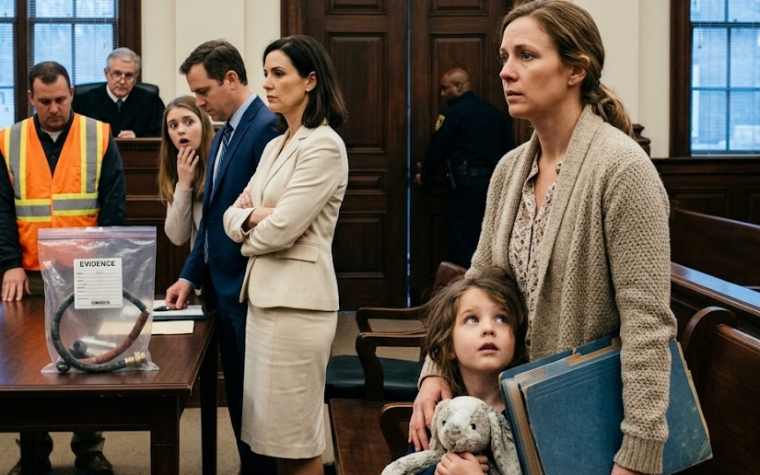
During the preliminary hearing, Daniel’s lawyer argued that many of the transfers had benefited our extended family and should be treated as marital spending.
My attorney agreed that the voluntary household payments were different from the clinic funds.
Then she presented the electronic audit trail.
The judge studied the forged authorization, the false consulting agreement, and the attempted five-thousand-dollar transfer made minutes after I revoked access.
Daniel was ordered to remain away from my businesses and barred from moving or selling marital assets without court approval.
Margaret sat behind him in the courtroom wearing a navy suit and a pearl necklace I had unknowingly paid for.
She would not look at me.
The criminal case did not resolve overnight.
Financial investigations rarely do.
Specialists traced transfers, compared signatures, reconstructed deleted emails, and separated voluntary gifts from money obtained through false documents.
Months later, Daniel accepted a plea agreement involving forgery, unauthorized account access, and theft from the clinic.