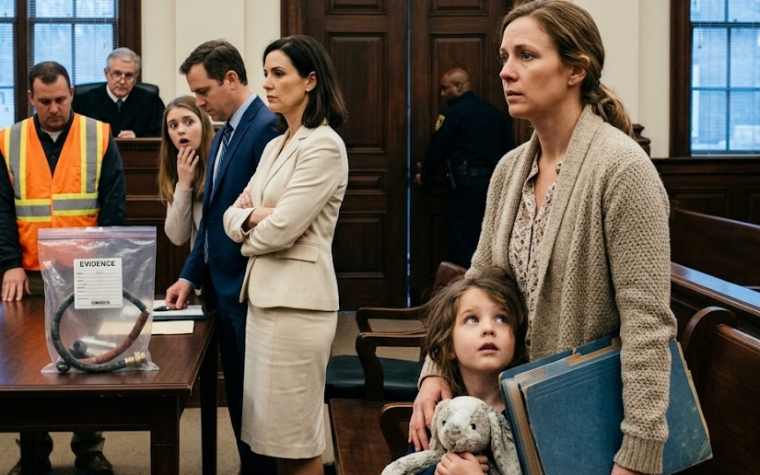
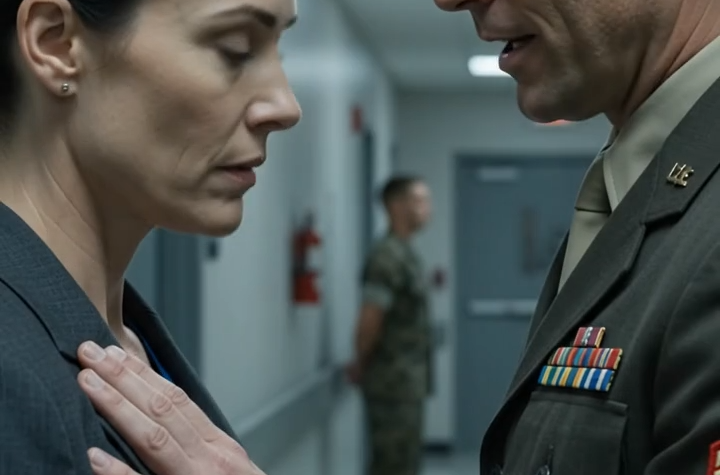
The glass doors opened just after nine Thursday morning.
The woman stepped into Blake Logistics with a bandage near her temple, another around one wrist, and the remains of an expensive blazer that had clearly survived something it had never been designed to survive.
Under her other arm was a thick folder.
Jackson Blake saw her from the conference room.
According to Kevin, who called me later, Jackson stopped speaking in the middle of a sentence.
He knew her.
Not from the mountain road.
From business.
For months, Blake Logistics had been involved in a quiet sale process.
Jackson had told employees almost nothing beyond vague references to investors and restructuring.
He had spent weeks polishing reports, cleaning up numbers, and presenting the company as a disciplined regional carrier positioned for growth.
The woman I had pulled from the burning sedan was the person on the other side of that transaction.
She was buying Blake Logistics.
The closing was scheduled for Thursday.
And before the final ownership papers were completed, she had one question.
She wanted to know who had been driving a Blake Logistics truck on the mountain corridor Tuesday night.
Jackson apparently recovered quickly.
He told her the route records were complicated.
She told him they weren’t.
The emergency responders had recorded where she was found.
Road-monitoring footage had captured a commercial truck stopping near the damaged guardrail.
One camera farther up the corridor had caught enough of the vehicle to identify Blake Logistics markings.
She had spent Wednesday in the hospital and part of that evening trying to identify the person who had pulled her from the car before it exploded.
By Thursday morning, the trail had led directly to Jackson’s building.
Jackson told her there had been an employee assigned to that route.
Then, Kevin said, he made the mistake of adding, “But he no longer works here.”
The woman looked at him.
“Why?”
Jackson began explaining that the driver had abandoned company responsibilities, failed to produce documentation, and had a history of insubordination.
She didn’t interrupt him.
That was probably what made him keep talking.
He described me as difficult.
He mentioned my safety complaints as if they proved his point.
He said I had become increasingly disruptive about fleet maintenance.
He suggested that my story about rescuing someone from a crash had appeared only after he confronted me about leaving my route.
Then she asked him when he had fired me.
“Yesterday morning.”
“What time?”
“Around seven.”
She glanced down at the folder in her hands.
“And you understood that he claimed he had stopped because a woman was trapped in an overturned vehicle?”
Jackson said yes.
“You didn’t verify it?”
He said there was nothing to verify.
She placed the folder on the conference table.
“I was the woman.”
Nobody spoke.
Jackson reportedly looked toward the glass wall as though there might be another version of the conversation waiting outside.
There wasn’t.
She told him the driver he had dismissed had climbed down a rain-soaked embankment toward a vehicle leaking fuel.
He had cut her seatbelt, forced open the damaged door, carried her uphill, and shielded her when the fuel tank ignited.
She told him that emergency physicians believed the difference between when I pulled her out and when the car caught fire had been measured in minutes, possibly less.
Then she asked for my personnel file.
That changed the room.
Because the sale had not begun that morning.
It had been under negotiation long before the accident.