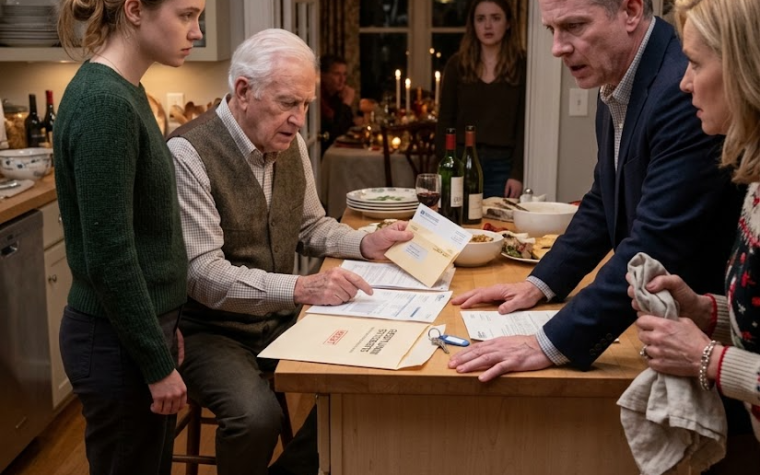
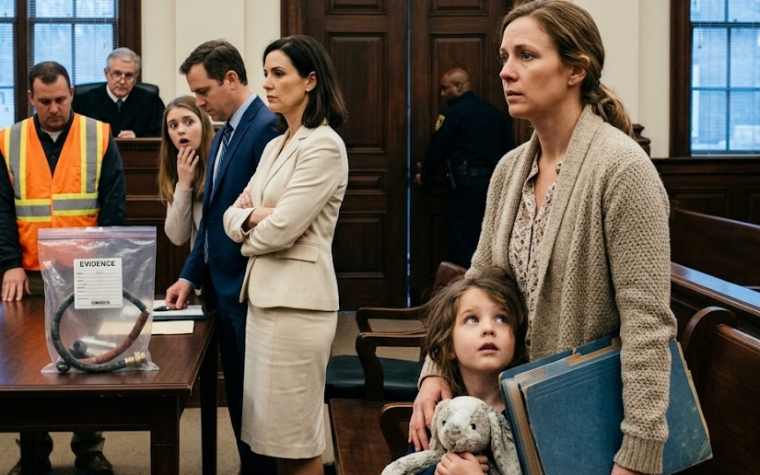
“You’re not walking away from this.”
The man’s expression hardened.
“Neither are you.”
He moved around Brandon and headed for his car.
That was when Tessa finally understood the scale of what had happened.
The three million dollars had not bought her security.
It had attached her struggling business to a disputed transaction involving property Brandon could not legally sell.
She rounded on him.
“You told me this was clean.”
“I was trying to save your company.”
“You told me Clara signed off.”
“She would never have agreed.”
“That is not the same thing!”
Brandon lowered his voice.
“Keep your voice down.”
“There is nobody here to impress anymore.”
That sentence seemed to hit him harder than anything I had said.
His shoulders dropped slightly.
For the first time that day, Brandon looked less like the man who had taken control of my property and more like someone realizing the control had always been imaginary.
The consequences did not arrive as one dramatic explosion.
They came through paperwork.
My attorney moved immediately to challenge the fraudulent deed and preserve the property record.
The trust documents established the legitimate chain of title.
My authentic signature records contradicted the signature submitted on Brandon’s paperwork.
The communications and transfer records documented how the transaction had been represented and where the funds had gone.
The supposed sale unraveled.
The farmhouse remained in the trust.
No buyer took possession.
No locks changed.
No furniture moved.
The orchard, lakefront, house, and barn stayed exactly where they belonged.
The financial mess was another matter.
The three million dollars could not simply be wished back into existence because Brandon had spent it.
Claims followed the money.
Lawyers became involved.
Accounts were examined.
Tessa’s business, already unstable enough to need millions in emergency funding, now had to answer difficult questions about money received from a transaction that could not deliver valid title.
Brandon’s own finances came under pressure as the people involved tried to recover what they could.
He called me repeatedly during the following weeks.
At first he was angry.
Then defensive.
Then apologetic in the strange way people sometimes apologize when they still believe the main problem is the consequence.
“I was trying to help someone I love,” he told me during one call.
“So was I,” I said.
“What does that mean?”
I looked out the farmhouse window toward the barn.
“It means love doesn’t give you ownership over someone else’s life.”
He was silent.
Eventually he asked, “Are you really going to let this destroy our family?”
I had expected that sentence.
He had written versions of it in his texts from the beginning.
Don’t make this ugly.
Family should help family.
The pattern was simple: Brandon made the choice, then assigned me responsibility for the consequences if I refused to absorb it quietly.
“No,” I said.
“I’m going to let your choices belong to you.”