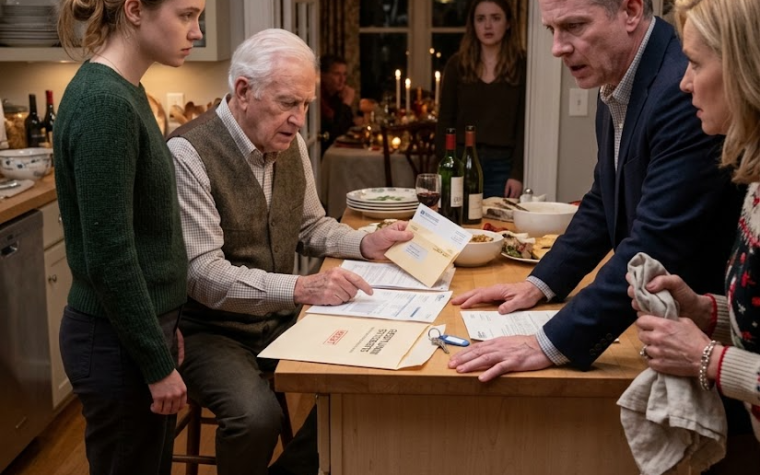
I signed my name.
My real signature.
Clean, deliberate, impossible to confuse with the copy on the forged form.
“I accept the shares,” I said.
“I accept the executorship.
And the Monterey project is terminated effective immediately.”
Adrian’s voice dropped.
“You’ll destroy the company out of spite.”
“No.
I’m going to find out what you did to it.”
Within forty-eight hours, the board confirmed my appointment as interim chair.
The audit took four months.
It found the eight hundred and forty thousand dollars Leonard already knew about, plus unauthorized consulting payments, inflated vendor contracts, and personal expenses disguised as development costs.
Adrian had not ruined Whitlock Development, but he had weakened it enough that one failed project could have collapsed the company.
The Monterey parcel was worse than I expected.
A new geotechnical review showed that the original plan would have increased runoff across an already unstable section of the ridge.
We withdrew every pending application and notified neighboring property owners before rumors could replace facts.
Lillian hired her own attorney and cooperated with the investigation.
She returned the consulting payments that remained in the Hawthorne account and admitted Adrian had directed the filings.
Her cooperation reduced her civil liability, but it did not save her position.
She left the company before the audit concluded.
She also left Adrian.
Eleanor contested the will, alleging undue influence and diminished capacity.
Samuel’s medical evaluation, video testimony, handwritten notes, and Leonard’s meticulous records defeated the challenge.
The court upheld every controlling provision.
Adrian was permanently removed from management.
Under the conditional trust Samuel created, he retained a limited financial interest only after surrendering his voting rights and repaying the diverted funds.
The forged authorization was referred to the licensing board and district attorney.
I was cleared publicly, though restoring my professional reputation took longer than any court order.
I did not keep Samuel’s house.
The estate allowed me to, but the rooms held too many versions of people who no longer existed.
We sold it.
Part of the proceeds funded the employee trust Samuel had drafted as a safeguard, and part established an independent safety-review program for every future Whitlock project.
The company survived.
Not because I became a Whitlock again.
Because I refused to.
Six months after the will reading, I returned to my architecture studio late one evening.
The same blueprints lay on my table, now stamped with the official withdrawal of the Monterey development.
Dana stood at the window with two cups of coffee.
“Any regrets?” she asked.
“About accepting?”
“About all of it.”
I thought of Adrian’s face when I signed my name.
Eleanor’s key on the table.
Lillian’s borrowed pearls.
Samuel’s tired voice asking me not to save his family, only to stop them from hurting anyone else.
“No,” I said.
“But I wish Samuel had known he didn’t need to apologize to me.”
Dana handed me a final envelope Leonard had discovered among Samuel’s personal papers.
My name was written across the front in his unsteady handwriting.
Inside was a photograph of the first building I had designed after opening my studio.
Samuel stood in front of it wearing a hard hat and a proud, crooked smile.
On the back, he had written one sentence.
Build what can stand.
I placed the photograph above my drafting table.
For years, I had thought dignity meant leaving quietly and never looking back.