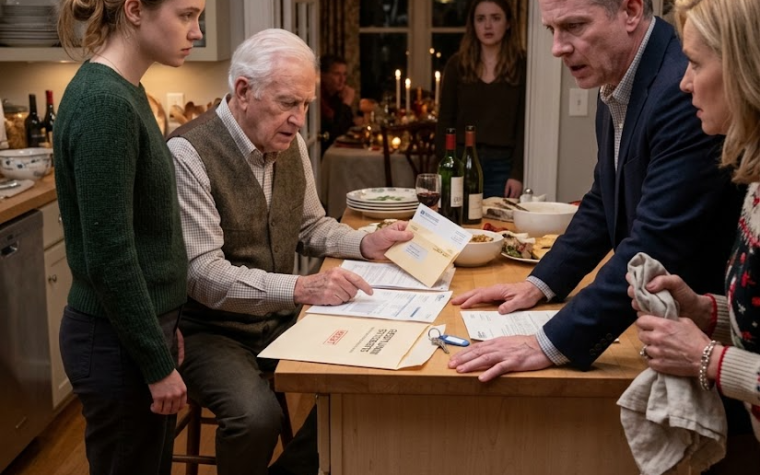
Each witness assumed another adult would act.
Each person chose comfort over confrontation.
By the time someone finally moved, the frightened child had already been taught that the room full of adults belonged to the person who hurt her.
I saved the voicemail but did not return it immediately.
My responsibility was not repairing the family’s conscience.
It was helping Millie feel safe again.
We found a child therapist who used drawings, toys, and stories instead of demanding direct answers.
During the first appointment, Millie placed a small wooden girl inside a toy house and surrounded it with adult figures facing away.
Then she added one figure near the door.
“That one is Daddy,” she said.
The therapist asked what Daddy was doing.
“Finding her.”
I had to look down so Millie would not see my eyes fill.
For weeks, she avoided birthday cake.
She became nervous when someone raised a voice, even during television commercials.
She asked before entering small rooms and kept doors open behind her.
Healing did not arrive as one dramatic moment.
It came in inches.
The first time she laughed while helping me bake cupcakes, I said nothing about the party.
I let her pour too many sprinkles into the bowl.
When some batter spilled onto the counter, she froze.
I handed her a towel.
“Accidents happen.”
She watched my face carefully.
“You’re not mad?”
“No.”
She wiped the counter, then deliberately placed one purple sprinkle on the tip of my nose.
I pretended not to notice until she started giggling.
Several months later, the legal case concluded with consequences that were less cinematic than people imagine and more permanent than Kendra expected.
She accepted responsibility for harming Millie rather than forcing the child through a contested hearing.
The court imposed conditions that included counseling, monitored compliance, and no contact with Millie unless a future court approved it.
My parents wanted me to describe that outcome as proof that the incident had been minor.
I saw it differently.
For once, Kendra’s version of events had not replaced Millie’s reality.
The recording had prevented that.
My mother sent letters.
Some apologized.
Others accused me of cruelty.
My father left voicemails about forgiveness and family loyalty but never once said, “I should have opened the laundry room door.”
I kept waiting for those words.
They never came.
Eventually, I stopped waiting.
On the anniversary of Hannah’s death, Millie and I visited the small hill overlooking the river where we often went to remember her.
Millie carried a bunch of yellow flowers and placed them beside the bench.
“Mommy told you to protect me, right?” she asked.
I looked at her.
“How did you know that?”
“You say it when you think I’m asleep.”
I smiled despite the ache in my chest.
“Yes.
She did.”
“Did you protect me at the party?”
The question held no accusation, but I felt one inside myself.
I had not reached the laundry room before Kendra hurt her.
I had trusted people who did not deserve access to her.
I had mistaken family connection for safety.