Not one of them had asked whether I was frightened in the car.
Not one had asked whether the broken bottle had come close to my face.
Not one had apologized without attaching the apology to a payment, a house, a debt, or a job.
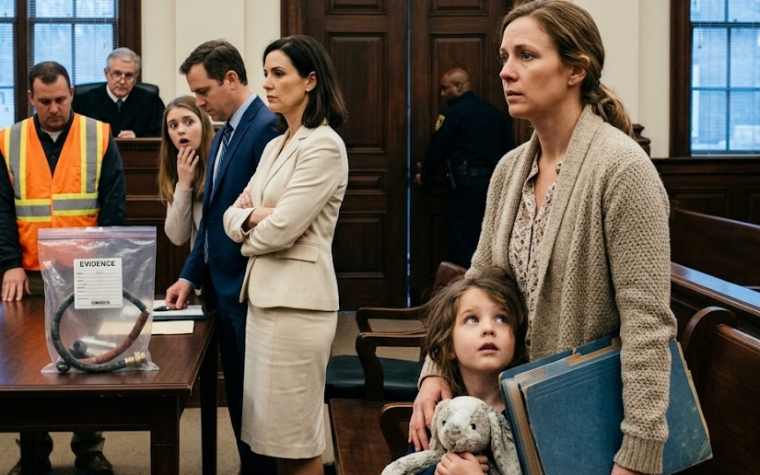
David closed the folder.
“The gifts are revoked.
The funding instructions have been canceled.
The mortgage payoff will not occur.
The retirement transfer will not occur.
The condo contribution will not occur.
The debt forgiveness and employment recommendation are withdrawn.”
Dad stood.
“We will challenge this.”
“You may obtain independent counsel,” David said.
“Preservation copies of every recording and document are available through the proper process.”
They did speak to another attorney.
A week later, David received a short letter acknowledging that no unconditional gifts had been completed and that the signed revocation terms were enforceable.
There was no lawsuit.
Ben’s case ended with a formal no-contact condition and an agreement requiring him to pay for the damage to my car.
He complained that the repair cost was unfair.
The photograph of the bottle beside the cracked mirror ended that argument.
He did not receive the job.
His debts remained his responsibility.
Laura could not close on the condo she had chosen because she had counted my money before it reached her account.
She blamed me in the family group chat until my aunt finally replied.
Frankie did not take your down payment.
You never had it.
It was the first time my aunt had defended me.
She called later and apologized for staring into her glass at dinner.
“I thought staying quiet meant I was not participating,” she said.
“It made it easier for them,” I replied.
“I know that now.”
The photographer sent me the reunion images.
Most showed forced smiles, raised glasses, and people posing in shirts that told them exactly who they believed they were.
The final photograph showed my empty chair.
The folded gray shirt rested on the seat.
The words were hidden inside the fabric.
On the table, the torn papers lay beneath the chandelier light while my family bent over them with their smiles gone.
I kept that photograph.
I did not keep the shirt.
My parents continued paying their mortgage.
Their retirement did not collapse, but it remained the same uncertain plan they had expected me to repair.
Dad sent several messages about family duty.
Mom sent apologies that gradually stopped mentioning money.
Three months later, a handwritten letter arrived from her.
For the first time, she did not ask me to reverse anything.
She wrote that the shirt had been cruel.
She admitted she had approved it because making me the joke kept everyone else comfortable.
She said Ben’s behavior frightened her and that her first instinct had still been to blame me.
At the end, she wrote, I do not know whether you can forgive me.
I read the letter twice.
Then I placed it in the navy folder where the gift documents had once been.
I did not tear it up.
I did not call her either.
Forgiveness, I had learned, did not require immediate access.
An apology could be acknowledged without becoming a key.
The money stayed where it had always belonged.