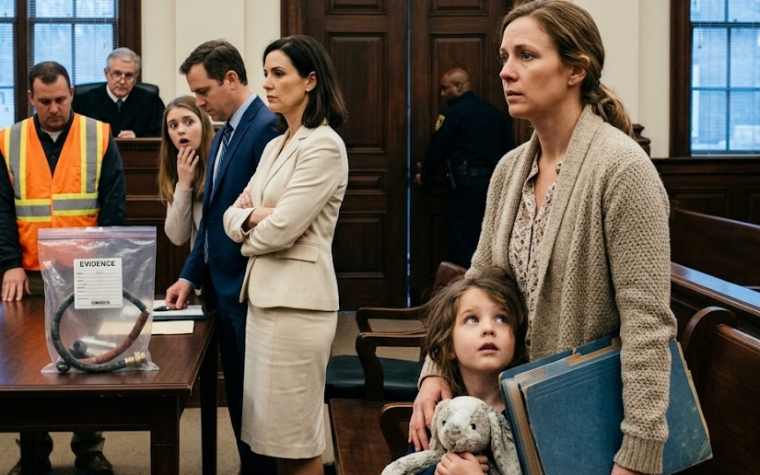
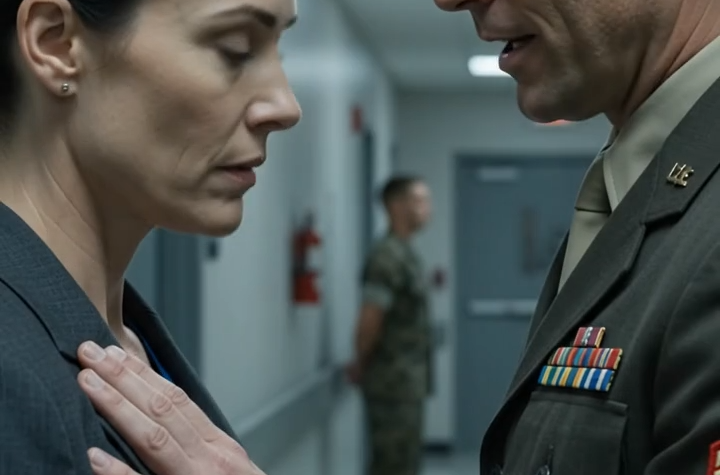
For once, I did not rescue her from the discomfort.
Eventually she said, “What we did was unkind.”
It was not a complete apology.
She did not name the planning, the audience, or the years leading to that afternoon.
But it was the first time she had admitted harm without immediately blaming my reaction.
I told her what would be required if she wanted a relationship with me: no insults disguised as advice, no comparisons with Olivia, no discussion of my marriage prospects, and no sharing my private life with relatives.
She called the rules harsh.
I called them the price of entering my home.
My father took longer.
By summer, the conservatory was finished.
I placed a writing desk beside the restored glass panels, exactly where the morning light fell.
The walled garden had begun to bloom again, and the carriage-house foundation was finally secure.
One evening, I found my father standing outside the gate.
His shoulders seemed smaller without an audience.
“The tree company needs access to the side boundary,” he said.
“A branch is hanging over Bellweather’s roof.”
“I know.
I already approved access for Tuesday.”
He nodded.
His gaze moved past me toward the house.
“You did all this yourself?”
“I hired qualified people and made the decisions.
The same way anyone manages a large project.”
He almost smiled, but shame interrupted it.
“I underestimated you,” he said.
It was not enough to repair everything.
It was enough to tell me he finally understood that I knew what he had done.
“You did,” I said.
I did not invite him inside that evening.
Forgiveness, I learned, was not the same as immediate access.
Love did not require pretending a wound had closed before it had.
Months later, I hosted my first gathering in the restored conservatory.
My aunt came early with flowers.
Mark carried chairs from the library.
Colleagues from the research foundation filled the long table with food and laughter.
From the windows, Bellweather’s blue shutters were visible through the trees.
The sight no longer hurt the way I expected.
Bellweather House had been my childhood dream because it represented safety, beauty, and a future I could choose for myself.
My family believed that owning its deed meant they owned the dream too.
They were wrong.
A dream was never the staircase, the turret, or the brass key.
It was the life I believed those things would permit me to build.
Marlowe House gave me that life, but not because it was larger.
It gave it to me because I entered without asking anyone whether I deserved to be there.
After the last guest left, I sat at the desk in the conservatory and opened a blank document.
For years, I had imagined writing my first book in Bellweather’s sunroom.
Instead, I wrote the opening sentence next door.
The iron gate stood closed beyond the garden, but the key rested beside my hand.
This time, no one else was holding it.