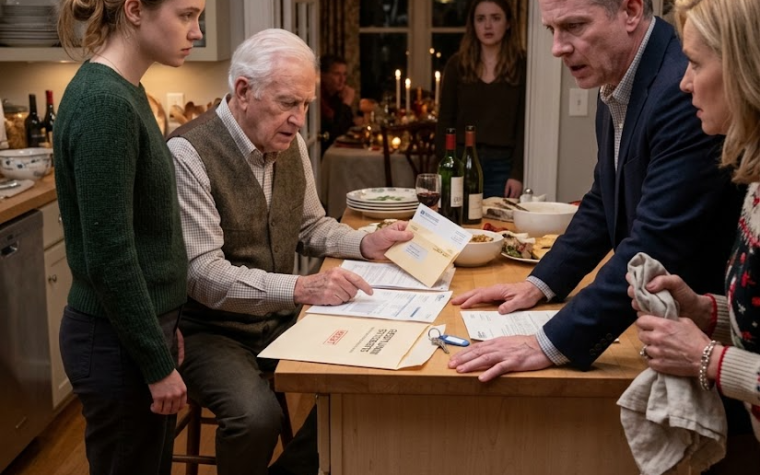
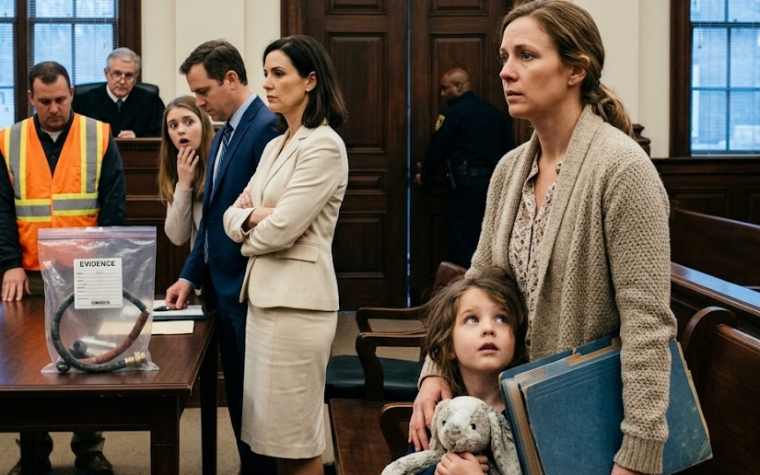
The government permanently revoked every fraudulent authorization.
The diverted funds were traced and ordered returned.
Richard faced federal charges related to fraudulent benefit access, false documents, unauthorized use of protected information, and the diverted payment.
Victoria’s false witness statement and participation in account recovery became part of the case against her.
Diane was held responsible for the acts investigators could prove she knowingly supported.
The final outcomes were determined through negotiated pleas rather than a dramatic trial.
Richard received the most serious penalties, including restitution, supervised restrictions, and a criminal record that ended his ability to portray himself as a respectable victim of an ungrateful daughter.
Victoria avoided the harshest potential sentence by cooperating, surrendering records, and admitting that she had helped submit documents she knew Rachel had not signed.
Diane accepted responsibility for assisting with verification and benefiting from the scheme.
None of them received the outcome they had expected.
They had assumed Rachel’s exhaustion would make her easy to pressure.
Instead, every cruel message became evidence.
Every threat strengthened the case.
Every attempt to explain the fraud exposed another lie.
Months later, Diane mailed Rachel a letter.
She wrote that the family had made mistakes.
She said Richard’s financial stress had affected his judgment.
She reminded Rachel of birthdays, school events, and childhood vacations as though ordinary parental duties created a permanent debt.
Near the end, she asked to meet Noah.
Rachel read the letter at the kitchen table while Ethan fed their son.
For years, she would have searched those pages for one sentence that sounded like love.
This time, she searched for accountability.
There was none.
Diane never wrote, I am sorry I abandoned you after surgery.
She never wrote, I am sorry we tried to use your child’s records.
She never wrote, You did not owe us your husband’s service, your benefits, or your silence.
Rachel placed the letter in the evidence box and did not respond.
On Noah’s first birthday, Ethan was home.
A few friends from the military community filled the living room.
The support coordinator who had helped Rachel leave the hospital brought a small wooden airplane.
Noah smashed his hand into the cake and laughed when frosting landed on Ethan’s uniform sleeve.
Rachel stood near the doorway, watching people carry plates, warm bottles, wipe spills, and offer help without making her beg for it.
Her phone remained quiet.
For once, the silence did not feel like abandonment.
It felt like a locked door.
After the guests left, Rachel opened the fireproof safe and removed the folder that had begun beside her hospital bed.
It contained the alerts, the forged forms, the voicemails, the investigator’s findings, and the final orders protecting her family’s accounts.
She added one last page.
It was a copy of the updated authorization record.
Only Rachel and Ethan had legal access.
Noah’s information was protected.
Every recovery contact had been verified.
Every old permission had been revoked.
Rachel closed the folder.
Her father had threatened to make her lose what she cared about.
Instead, he taught her exactly what she had to protect.
She returned the folder to the safe, turned the key, and walked back into the living room, where Ethan was rocking their sleeping son.
Rachel no longer felt like the daughter waiting for her family to choose her.
She was a mother who had already chosen her child, a wife who had defended her home, and an investigator who had trusted the evidence even when it led to the people who raised her.
Her dignity had not been restored by their punishment.
It had been restored the moment she stopped asking their permission to defend herself.