That ended that afternoon.
I saved the audio file in more than one place.
I photographed the mark developing across my back.
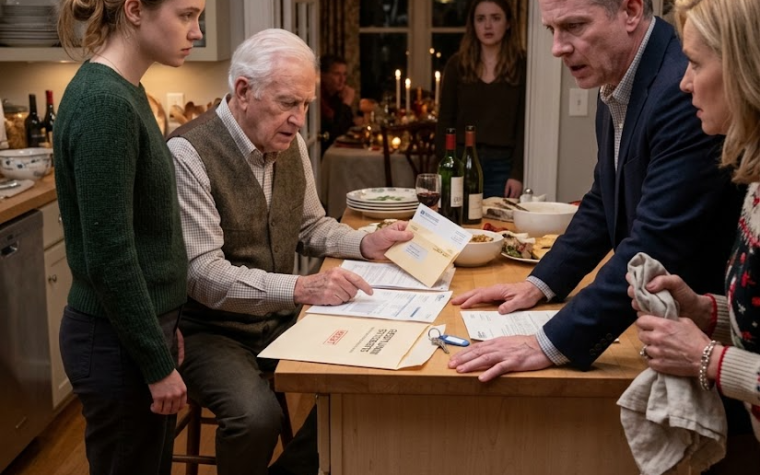
I wrote down the sequence while every detail was still fresh: the wedding invoices, my refusal, Seraphina’s demand, Bennett turning the deadbolt, the shove, the ATM card, the PIN, the insults, Bennett blocking the exit, and the words he spoke after I started recording.
Then I began separating anything that still connected Bennett to my finances.
There was less than he probably believed.
I had never placed him on the ownership documents for my house.
He had no ownership in my company.
He was not a signer on my primary business accounts.
But over time, convenience had created smaller openings: saved payment methods, household access, subscriptions, passwords I had shared because we were supposedly building a life together.
I closed every opening I could identify.
The next morning, Bennett called twenty-three times.
I answered none of them.
His messages changed tone as the hours passed.
First came anger.
Then disbelief.
Then romance.
Then fear.
He said his mother had crossed a line.
He said he had only locked the door because he wanted me to calm down.
He said he never intended to keep me there.
He said the wedding pressure had gotten to everyone.
He said we could forget the orchids.
The orchids.
As though imported flowers were the problem.
By evening, Seraphina began calling too.
I did not answer her either.
One voicemail started with an apology and ended with a warning about deposits we might lose if I embarrassed the family by canceling.
That was Seraphina in one message: regret as an opening tactic, money as the real concern.
I canceled what I had personally contracted and dealt directly with the vendors.
Some deposits were refundable.
Some were not.
Losing money hurt, but not nearly as much as marrying someone because I was afraid of wasting what I had already spent.
Eighty thousand dollars had once felt like proof I had gone too far to turn around.
Now it looked like tuition.
Expensive tuition.
But tuition nonetheless.
Bennett finally appeared at my house two days later.
I did not let him inside.
He stood beyond the closed door while I spoke to him from a safe distance.
“I need my things,” he said.
“I’ll arrange for you to receive them.”
“So that’s it? You’re deleting me from your life?”
“You locked me in a house.”
“For five minutes.”
The answer stunned me.
Not because it was persuasive.
Because he thought duration changed the act.
“Five minutes,” I repeated.
He realized too late what he had admitted.
“I didn’t mean locked.
I mean—Mom was upset.
I was trying to stop you from storming out.”
“You turned the deadbolt and stood in front of the door.”
“Because you wouldn’t listen.”
There it was again.