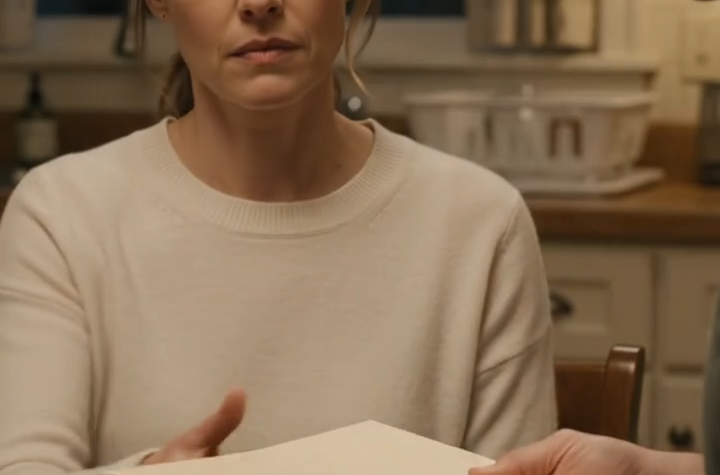
“The signature on your earlier version was better,” I said.
“Not perfect, but better.”
For the first time, fear crossed his face.
I opened the black tablet Harrison had delivered to the house and played the final section of my mother’s recording.
Her face appeared.
Garrett went completely still.
“Garrett,” my mother said from the screen, “you may believe my daughter’s grief makes her easy to control.
You are mistaken.”
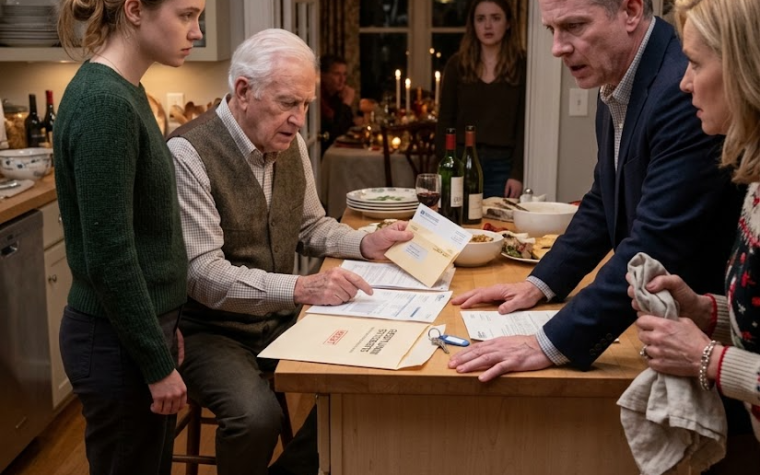
She held up a copy of the forged authorization.
“This document, the security footage, the visitor records, and the messages have been preserved.
My daughter’s inheritance is protected from you.
Any attempt to use this document will be referred for investigation.”
Garrett lunged for the tablet.
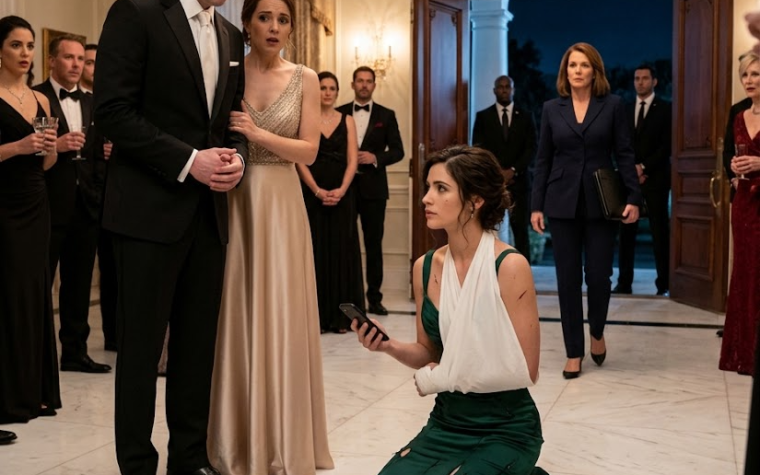
The dining room doors opened before he reached it.
Two members of the estate’s security staff entered.
Harrison stood behind them.
Garrett stopped.
I had never seen hatred erase a face so quickly.
“You planned this,” he said to me.
“No,” I answered.
“My mother did.”
He tried one final approach.
His shoulders lowered.
His voice softened.
His eyes filled with manufactured pain.
“Eliza, listen to me.
I made mistakes, but I love you.”
Sienna let out a broken laugh.
“He said the same thing to me.”
Garrett turned on her.
“You came to me.
You begged me to help you get what Margaret owed you.”
“And you used me.”
“You were happy to be used.”
The cruelty in his voice ended whatever remained between them.
Sienna sat down and began telling the truth.
She had met Garrett at a hotel bar months before he approached me.
She had spoken bitterly about our mother, the vineyard, and the way she believed I was always chosen first.
Garrett listened.
Then he asked questions about the family business, the estate plan, and my marriage to David.
After David died, he told Sienna he could get close to me.
He said grief would make me grateful for attention.
Sienna introduced us at a charity dinner and pretended they had never met.
Their relationship continued after Garrett married me.
At first, Sienna believed he loved her.
Later, she understood that he loved access more.
But by then, shame and dependency had locked her into the plan.
Garrett denied everything she said, even when his own messages contradicted him.
He claimed the authorization was only a draft.
He claimed the copied signature was a formatting test.
He claimed the photographs were misleading and my recording was illegally made, though Harrison calmly informed him that recording a conversation I could personally hear inside my own home did not turn his words into innocence.
That night, Garrett left the estate under supervision with one suitcase.
The locks were changed before his car reached the main road.
The weeks that followed were not clean or satisfying.
Betrayal rarely ends when the door closes.
Garrett fought the divorce.