They described a new life.
Michael had promised that after I was “out of the way,” they could stop hiding their relationship.
He told her the house would be theirs.
He discussed which furniture to keep and which rooms they would change.
The woman had asked whether Ethan would “cause trouble.”
Michael replied that Ethan would not be a problem after the dinner.
Even then, she tried to protect herself.
She said she believed Michael planned to send Ethan away with relatives.
She insisted she had never agreed to hurt anyone.
Then detectives played the 911 recording for her.
She heard her own voice saying, “You said they’d be unconscious.”
She heard herself ask about the suitcase.
She heard Michael say they needed to finish the plan.
Her story changed before the recording ended.
She admitted she knew Michael had put something in the food.
She claimed he told her the dose would only make us sleep.
She said he planned to drive us away and stage an accident but promised no one would suffer.
It was a desperate distinction, and the prosecutor did not accept it.
Michael denied everything.
He said the sedative had entered the sauce accidentally.
He said the forged letter was part of a private writing exercise.
He said the suitcase had been packed because I had threatened to leave.
He even claimed the statements on the emergency recording had been taken out of context.
But there was no context that made his words harmless.
“You were never supposed to make it this far.”
“Once they’re gone, everyone will think she took the boy and ran.”
“Not without finishing this.”
Each sentence returned to him in the interview room.
He asked for a lawyer.
Ethan and I remained in the hospital for two days.
Physically, we recovered faster than expected.
The fear stayed longer.
Ethan startled whenever footsteps stopped outside his room.
He refused food unless he watched someone open the package.
At night, he woke convinced the bathroom handle was moving again.
I understood because I heard it too.
Even in silence, I could hear the metal scraping inside the lock.
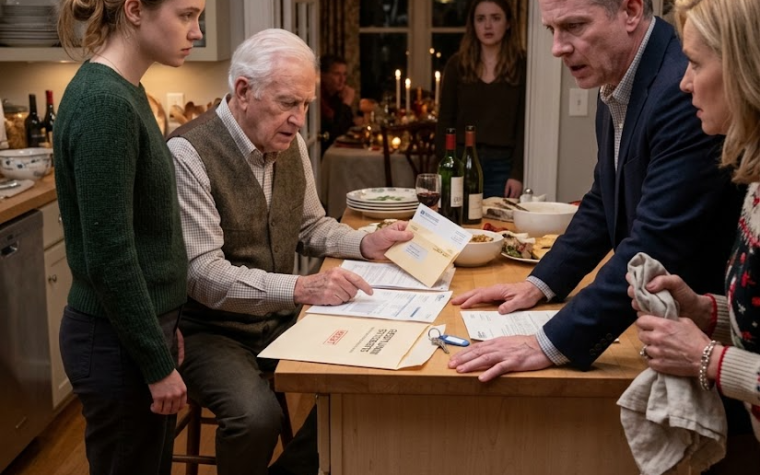
When we returned home, the dining table was still there, but the plates had been removed as evidence.
A pale ring marked the place where Michael’s water glass had stood.
I walked from the kitchen to the bathroom and saw the cracked doorframe.
For several minutes, I could not move.
Ethan came up beside me.
“We won,” he said quietly.
The word felt too large for what had happened.
“We survived,” I told him.
That was enough for the first day.
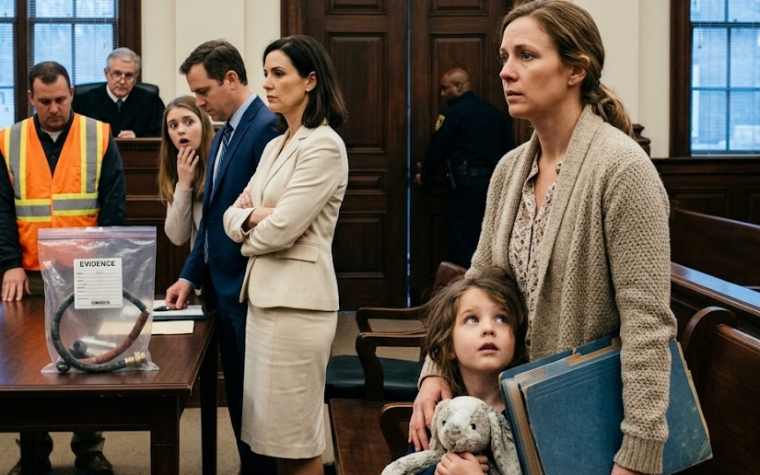
The prosecution built the case from layers Michael had believed would never be connected: the medical tests, the drug residue, the forged letter, the packed suitcase, the messages, the emergency recording, and the testimony of the woman who had entered our house in heels.
She eventually accepted responsibility for her role and agreed to testify truthfully.
Her decision was not heroic.
She did it after realizing Michael would blame her for everything if it helped him escape punishment.
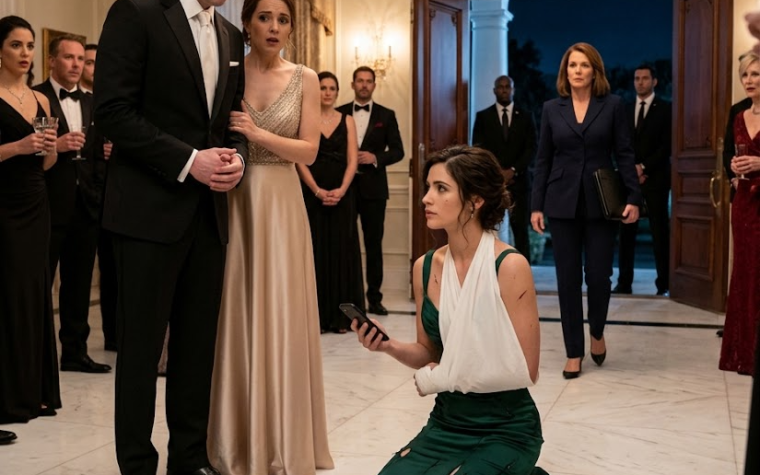
On the witness stand, she described arriving at our house with the suitcase.
She said Michael had told her the drug would work within minutes.
He expected Ethan and me to be unconscious before she arrived.
When she found the dining room empty, she panicked.
Michael did not.
He searched for us because he intended to complete the plan.