For thirty years I had carried an old wound without ever naming it.
During twenty-five of those years, Fletcher had slowly convinced me that wanting to be seen was childish, that my memories were irrelevant, that the safest version of me was the smallest one.
Now a man from my past was not promising to rescue me.
He was simply telling me I had mattered.
Fletcher appeared in the doorway.
“We’re leaving.”
I looked up.
He was speaking to me, not asking.
“No,” I said.
His nostrils flared.
“We need to go home.”
“You can go home.”
“With what car?” he asked.
“How exactly do you plan to get back?”
It was such a small sentence.
But it contained our entire marriage.
He controlled the accounts.
The cars.
The cards.
Even the $200 monthly allowance he described as generosity.
The billionaire began to stand.
I lifted a hand.
“Please.
Don’t.”
He sat back down.
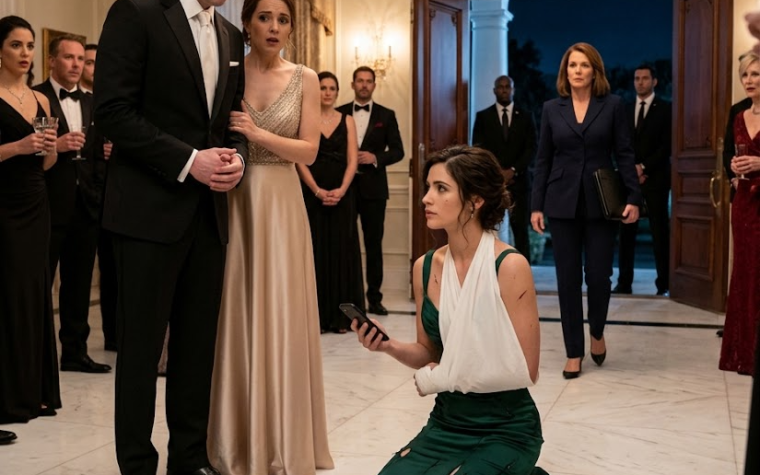
I took out my phone.
“I can call a cab.”
Fletcher laughed under his breath.
“With what money?”
I looked at him.
Then, for the first time in years, I laughed too.
Not because it was funny.
Because he had finally said the quiet part where witnesses could hear it.
A woman from Fletcher’s department had stepped into the corridor behind him.
She stopped when she heard us.
Fletcher noticed and immediately changed tone.
“That isn’t what I meant.”
“Yes, it is.”
He lowered his voice again.
“You’re making a scene.”
“No, Fletcher.
I’m standing in one.”
I called a cab.
The billionaire offered nothing except, “Let me know when you get home safely.”
I appreciated him for that more than if he had offered a limousine.
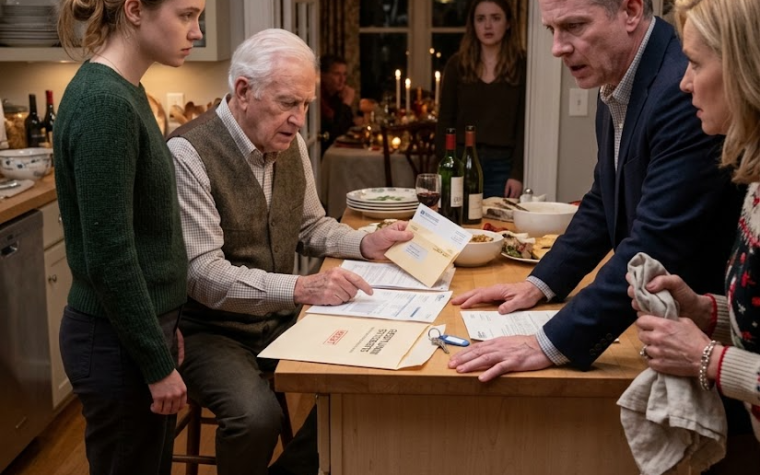
When I returned home after midnight, Fletcher was waiting in the kitchen.
His tuxedo jacket hung over a chair.
His father’s gold watch sat beside a half-finished drink.
“You cost me tonight,” he said.
There was no apology.
No question about how I felt.
Only cost.
I set my purse on the counter.
“Did I?”
“You embarrassed me in front of the man who controls the company.”
“You told me my clothes embarrassed you.