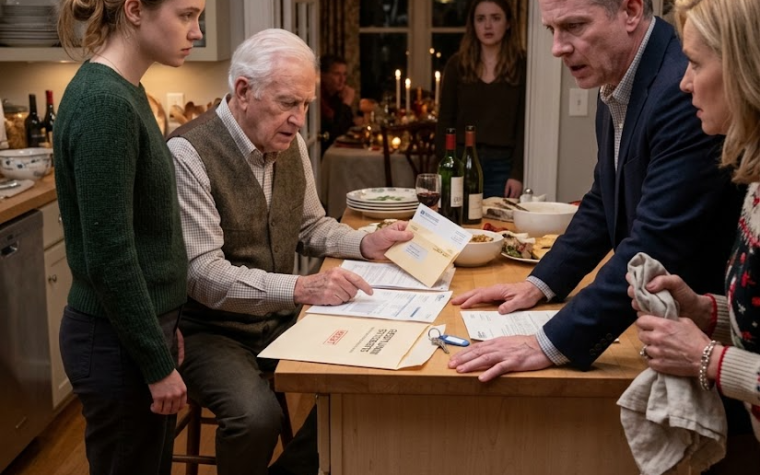
“You put a deposit on the vineyard.”
“I said we will fix it.”
The celebration cart at the grocery store suddenly made sense.
They had not been buying dinner.
They had been rehearsing a future built on money Scott did not yet possess.
Scott looked back at me.
“You manipulated her.”
I almost laughed.
I had met his grandmother only a handful of times during the final year of her life.
We spoke on holidays, and I sent meals when she was recovering from surgery, but I had never discussed her estate.
Jerome removed another document from the folder.
It was a letter stored with the original will and signed by Scott’s grandmother.
The letter explained why she had included Article Fourteen.
She wrote that money had always brought out impatience in her grandson.
She feared he would mistake inheritance for permission to discard anyone who had supported him before it arrived.
She did not require him to remain in an unhappy marriage forever.
She required him to behave honestly, disclose the inheritance, and refrain from coercing his wife during the vulnerable months after her death.
The final line was only twelve words long.
Avery has shown loyalty.
If Scott answers loyalty with cruelty, protect her.
Scott read it over Jerome’s shoulder.
His mouth opened, but no sound came out.
The probate dispute lasted four months.
Scott challenged the condition and claimed his grandmother had been confused.
The executor produced medical evaluations showing that she understood the document when she signed it.
Her estate lawyer produced notes from two private meetings in which she described exactly what she wanted the clause to prevent.
Scott then argued that he had not actually evicted me because I remained in the house.
Jerome submitted the texts about changing the locks.
Scott claimed the divorce had been mutual.
Jerome submitted the prepared papers, the date they were created, my manager’s statement, Rachel’s statement, and Scott’s own demand that I sign within two hours.
Scott claimed the messages had been emotional exaggerations.
The probate judge asked why the papers had been prepared before he told his wife that his grandmother was dead.
Scott had no answer.
Kayla attended the first hearing but not the second.
By the third, she had moved back into her old apartment.
Her pregnancy remained private, and I made no effort to contact her.
Whatever happened between them was no longer my responsibility.
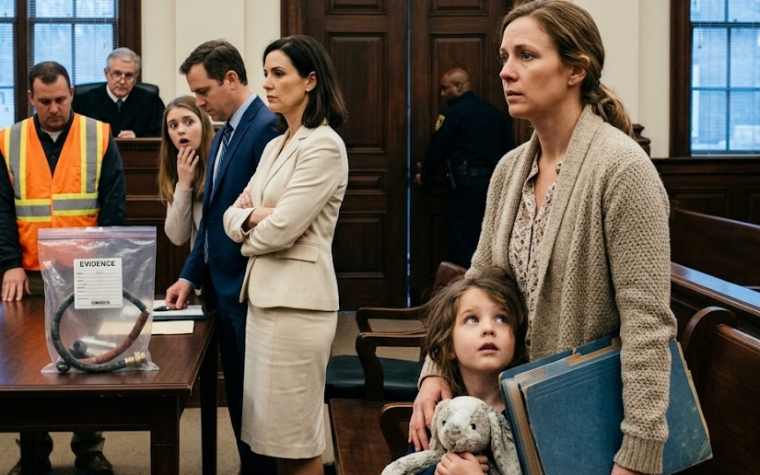
During the final hearing, Scott sat across the aisle from me without looking in my direction.
The judge found that the will expressed a deliberate, narrow condition rather than a permanent command about whom Scott could marry.
The evidence showed that he had initiated a secret divorce, attempted to remove me from the residence, and demanded a broad release during the prohibited ninety-day period.
The bequest to Scott lapsed.
The alternate gift to me stood.
Scott’s attorney placed a hand on his shoulder before the judge finished speaking.
Scott shook it off.
He turned toward me at last.
“You took everything.”
I held his gaze.
“No.
You were given a choice.
You made it before I knew there was one.”
The estate did not transform my life overnight.
There were taxes, administrative expenses, investment decisions, and months of careful planning.
Jerome introduced me to a financial adviser who spoke in measured sentences and refused to let me make decisions while I was angry.
The divorce continued separately.
Scott kept the house because he had purchased it before our marriage, but he had to compensate me for documented contributions to the mortgage principal and the renovations I had paid for.
The blue shutters, new kitchen floor, rebuilt porch, and flower beds had never changed the name on the deed, but they were no longer invisible.