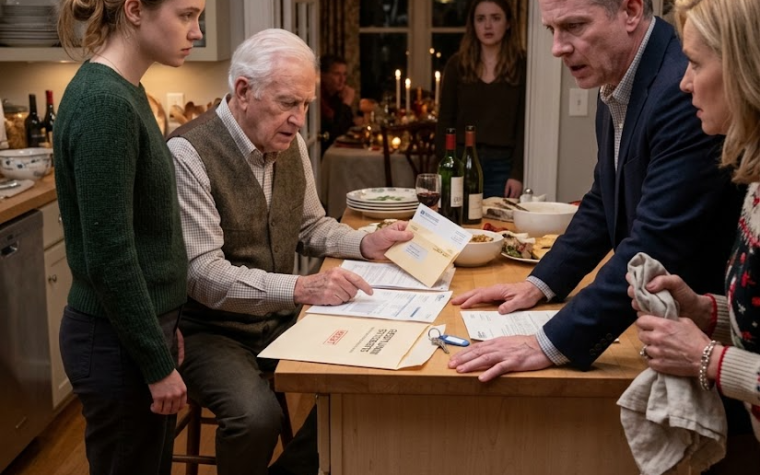
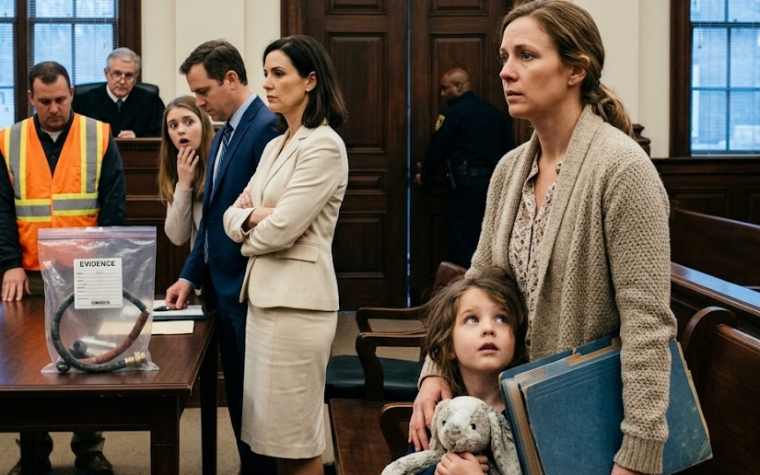
“You’re destroying this family over a misunderstanding.”
I looked down at my daughter.
“You were going to tell me she died.”
He didn’t answer.
That silence was the first honest thing he had given me all day.
Once they were gone, the room felt larger.
Maya helped settle Zeke into a chair beside me.
Another nurse brought him juice and something to eat.
He held the cup with both hands but barely drank.
I asked Maya the question I had been afraid to ask.
“Were they actually able to take her?”
“No,” she said.
“Not once the concerns were identified.”
She explained only what she knew for certain.
The paperwork had raised questions even before surgery because it had been presented as though I had already agreed to arrangements I could not remember discussing.
When Zeke produced the recording, the staff stopped treating those questions as clerical confusion.
My daughter had remained under hospital care.
No transfer had happened.
No discharge decision had been completed.
The papers were evidence of an attempt to control a decision that required scrutiny, not a magic document that erased me as her mother.
I started crying again.
This time, from relief.
Maya stayed quiet until I could breathe.
Then she said, “There are people here who can help you make decisions about what happens when you’re discharged.
You don’t have to decide everything this minute.”
That mattered.
For years, every crisis in my marriage had ended with Rayan forcing a decision while I was exhausted, frightened, or apologizing.
This time, nobody rushed me.
A hospital social worker came later.
I told her about Dalia moving into our house, the isolation, the criticism, the way Rayan disappeared when I resisted, the whispered conversation in the kitchen, and the documents I had never seen.
Zeke told her what he had heard too.
His account was simple.
That made it worse.
“Dad said if the baby wasn’t a boy, they would handle it before Mom woke up.
I thought they were going to take her.”
The social worker asked why he brought the iPod.
Zeke looked embarrassed.
“Because grown-ups say kids imagine things.”
I had to turn my face away.
No child should have to think like that.
The hospital documented everything.
The recording was preserved.
The questionable papers remained under review.
Rayan and Dalia were no longer permitted to make decisions on my behalf simply by walking into the room and speaking louder than I could.
The next time Rayan was allowed to speak with me, a staff member remained nearby.
He looked exhausted.
For the first time in our marriage, I wasn’t afraid of his anger.
He started with denial.
“Mom got carried away.”
I said nothing.
“She has old-fashioned beliefs.
You know that.”
Still nothing.
“The papers weren’t what you think.”
“What were they?”
He rubbed his face.