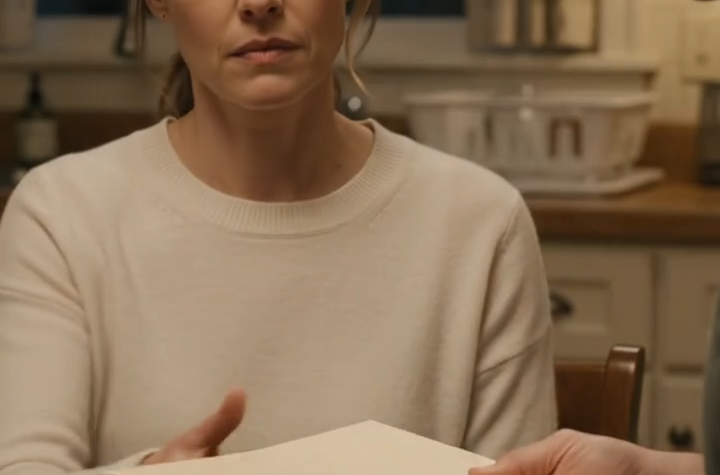
“Is this what you wanted? To humiliate me with that?”
I almost laughed, not because anything was funny, but because even now she believed my profession was the weapon.
“I didn’t bring that card into this room,” I said.
“I didn’t bring prosecutors.
I didn’t bring security.
I pressed a panic button because you took my newborn after I told you not to.
Everything that happened after that began with your choices.”
Her face crumpled into anger again.
“Why didn’t you tell me you were a judge?”
That question had been coming for three years.
I finally answered it.
“Because I wanted to know whether you could respect me without a title.”
She stared at me.
“And?”
“You gave me your answer.”
For once, Mrs.
Whitfield had nothing to say.
The officers escorted her from the recovery suite to continue the formal process elsewhere in the hospital.
She was not allowed to return to the secured maternity unit.
Hospital administration restricted her access, preserved the recordings, and documented the incident.
My attorney remained behind long enough to explain what would happen next.
Any request for legal protection would be handled by people who had no reason to favor me.
Any potential criminal decision would belong to the appropriate authorities, not to me.
I would not touch the process professionally.
That distinction mattered.
I had spent my career expecting people in my courtroom to respect boundaries between evidence, emotion, and authority.
I wasn’t going to abandon those principles the first time I was the frightened person in the hospital bed.
The recordings were preserved.
The security reports documented when Mrs.
Whitfield entered the wing and when the panic alarm was activated.
The nurses recorded my physical condition and the mark on my face.
The surrender papers were retained as part of the record.
Later, my request for protection was placed before a different judge through the ordinary process.
I did not call colleagues seeking favors.
I did not ask anyone to punish her because she had insulted me for years.
I asked for one thing: distance sufficient to keep Noah and Ava safe while the incident was addressed.
That request was granted on a temporary basis while the matter proceeded.
Mrs.
Whitfield’s most damaging problem was not that her daughter-in-law happened to be a judge.
It was that she had behaved as though consent stopped mattering when she wanted something badly enough.
Her discovery of my career simply destroyed the story she had relied on to justify it.
I was not helpless.
I was not ignorant of what I was signing.
I was not financially desperate.
And I was not going to hand over my child because she placed a legal-looking document on my hospital bed and ordered me to cooperate.
The irony was that none of those facts should have mattered.
Even if I had truly been unemployed, she still would not have had the right to take my son.
Even if I had never entered a courtroom, my “no” still would have meant no.
Even if nobody in that hospital had recognized me, Noah and Ava still would have been my children.
That was the point she had missed completely.
The afternoon eventually became quiet again.
The attorney left.
The prosecutors left.
Security returned to the corridor.
The nurses dimmed the lights and helped me settle both babies near me.
For hours, I had imagined the moment Mrs.