But the copy in the hospital’s central archive had been replaced.
The replacement carried the same date and reference number, but the language had changed.
It authorized routine file consolidation and allowed administrators to destroy duplicates.
The forged version made it appear that Colonel Whitaker had approved the deletions.
The original should have been impossible to find.
A junior courier had delivered it to the wrong records tray before the replacement reached our department.
I saw the real order, logged it, and placed a copy in the gray folder.
Two days later, security officers appeared at my desk.
Colonel Whitaker’s wife pressed her fingers against her lips as he continued the story for my family.
“They accused her of taking protected documents,” he said.
“They told everyone she was unstable, vindictive, and seeking attention.”
My mother stared at me.
“You told us you had been suspended.”
“I was suspended.”
“You said there had been an argument.”
“There was.”
I remembered the hospital corridor, the fluorescent lights, and the administrator who blocked the exit while demanding the folder.
He had reached for it.
I had stepped back, caught my heel on a metal threshold, and struck my temple against the wall.
The injury required six stitches.
By the time my father collected me, the story had already reached my parents.
Their daughter had caused a scene at a military hospital.
Their daughter had stolen files.
Their daughter had accused respected officials of misconduct.
In the car, my father asked only one question.
“What did you do?”
Not what happened.
Not who hurt you.
What did you do?
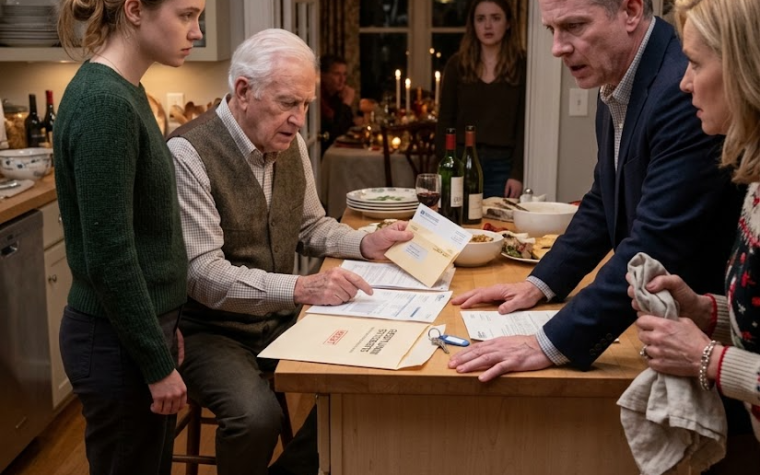
At dinner, my mother’s hand trembled against the edge of the table.
“You never explained any of this.”
“I tried.”
“That is not true.”
“I came home with a bandage and the folder.
You told me not to bring scandal into the house.”
Her mouth opened, but no words came.
My father looked down.
I remembered the exact sentence my mother had used that night.
Respectable people do not end up in situations like this, Grace.
For years, I had wondered whether she remembered saying it.
Judging by her face, she did.
Colonel Whitaker reached toward the folder but stopped before touching it.
“I did not meet Grace until the investigation began,” he said.
“By then, officials inside the hospital had prepared a complete case against her.
They claimed she had fabricated the deletion logs and removed records because she held a personal grudge.”
Ethan finally spoke.
“Why would they do that?”
“Because blaming a temporary employee was easier than admitting senior administrators had falsified official records,” I said.
“And because the altered order gave them someone else to blame if the truth surfaced.”
Colonel Whitaker nodded.
“Me.”
The forged directive would have ended his career.
It could have stripped him of his command, his reputation, and every honorable assumption attached to his name.
More importantly, it would have protected the people who had harmed patients and retaliated against families.
They needed the original order gone.
They needed my folder gone.