Some work had been done without the required approvals.
Part of the deck repair had created a drainage problem.
Electrical outlets added to the kitchen needed correction.
The contractor accepted responsibility for failing to verify ownership and agreed to cooperate fully.
His insurer became involved.
He returned my belongings and arranged for the heart-pine island to be brought back.
My parents remained defiant until they received the civil complaint.
The claim did not ask for emotional damages or some theatrical amount designed for revenge.
It demanded the cost of restoring the property, repairing unsafe work, replacing missing items, covering legal and inspection fees, and compensating me for the period the house could not be used.
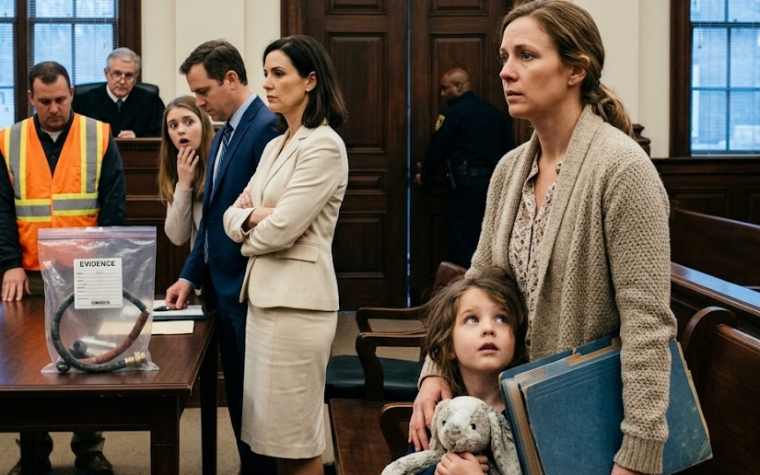
The evidence package included the deed, camera footage, contractor records, messages, police reports, and statements from Todd and Aunt Carol.
My sister provided the most damaging evidence: the full conversation with my mother.
One message from my father read, Do not tell Claire until the truck is unloaded.
She will make noise, but she will not remove you once the children are inside.
That sentence ended his claim that everything had been an innocent misunderstanding.
My parents hired an attorney.
Their position changed within a week.
They stopped saying they owned a family interest.
They began saying they had acted out of concern for my sister.
Then they argued that the renovations had increased the value of the property.
My attorney answered with photographs of the unauthorized demolition and the inspection report.
Money spent without permission did not buy them a share of my home.
A more expensive kitchen did not erase the trespass.
Good intentions, even if they had existed, did not create consent.
The matter ended in mediation several months later.
My parents agreed to pay the portion of restoration and legal costs not covered by the contractor’s insurer.
They surrendered every key and signed an order prohibiting them from entering the property or presenting themselves as my representatives.
The police did not march them away in handcuffs, and no judge delivered a dramatic speech.
The consequences were quieter and more permanent.
They lost the money they had spent trying to control my house.
They paid again to undo the damage.
They lost the trust of the daughter they claimed to be helping.
Several relatives stopped accepting their version of family events without checking the facts.
My sister and her family rented a small townhouse outside Baltimore.
I paid for the two hotel nights I had promised, but I did not pay her rent or offer another property.
She and her husband handled the move themselves.
For a while, our conversations were brief and uncomfortable.
Then she apologized without explaining it away.
“I wanted to believe them,” she said.
“The offer solved everything, so I did not ask the question that might ruin it.”
That was the first honest thing anyone in my family had said about the house.
I told her forgiveness would take time.
She said she understood.
Todd apologized too.
Aunt Carol stopped making jokes about my success.
Melissa sent back a box of belongings my mother had distributed from the house, including a framed photograph and a set of brass candleholders.
My parents left dozens of messages.
Some were angry.
Some were wounded.
Some blamed my attorney, my career, money, stress, and Christmas.
My mother eventually left one that said, “We only wanted everyone to be together.”
I saved it beside the clip of her directing workers through my bedroom.
Not because I wanted revenge.
Because I had finally learned that memory was not enough when people were willing to rewrite it.
By late summer, the house was mine again in more than name.
The black paint came off the front door, and the blue returned.
The gray vinyl was removed.