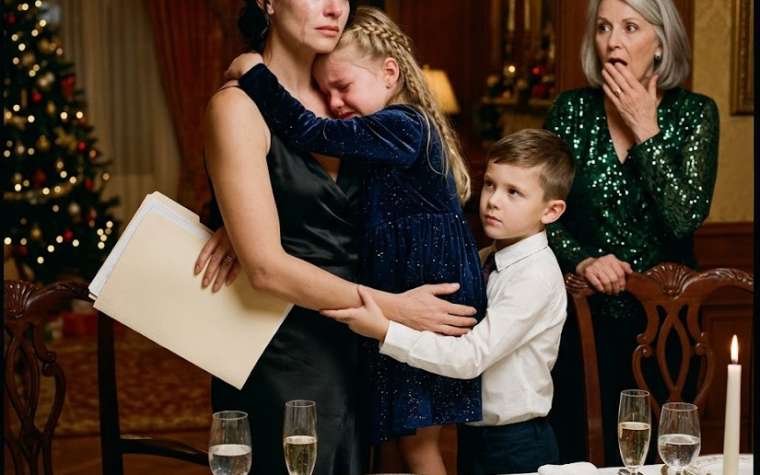
“You have changed.”
“Yes.”
That was the only accusation I accepted.
Dad refused to speak to me for six weeks.
Donovan sent occasional messages about how I had divided the family.
I responded once: The person who says no does not create the division.
The people who decide no does not matter create it.
After that, I stopped defending myself.
The family chat changed too.
Aunt Vera posted a message saying no one should volunteer another person’s home, money, vehicle, or time without direct permission.
Cyrus agreed.
Sable apologized privately and admitted that my mother had told everyone I was shy about hosting but secretly wanted the family to enjoy the house.
I believed Sable.
My mother had spent years translating my boundaries into temporary moods.
The hardest conversation came with my father in late autumn.
He met me at a coffee shop halfway between Charlotte and the lake.
He looked older than he had in the driveway video.
For several minutes, he talked about traffic, hospital funding, and the price of groceries.
Then he placed an envelope on the table.
Inside were two copied keys.
“One was mine,” he said.
“One was your mother’s.”
“They no longer work.”
“I know.”
He kept his hand on the envelope.
“I should have asked.”
It was not a complete apology, but it was the first sentence he had offered that did not contain an excuse.
“Yes,” I said.
“You should have.”
He nodded once.
“I thought because you were my daughter…”
He stopped.
“That what was mine was yours?” I asked.
He looked down.
“Something like that.”
“No.
You thought what was mine was available to you.”
He did not argue.
I told him the locks would remain changed.
I told him he would not receive a new key.
I told him trust would not be restored by pretending the weekend had been a misunderstanding.
He listened.
That mattered, but it did not erase anything.
For the first year after the confrontation, I invited no relatives to the lake house.
I needed the rooms to feel like mine again.
I repainted the guest bedroom, replaced the chipped wineglass, and emptied the hall closet where my mother had kept her supplies.
I burned the handwritten schedule in the firepit by the water.
Not because I wanted to destroy evidence.
I had scanned every page.
I burned it because I did not want their secret calendar living in my house.
The following spring, I invited Aunt Vera for lunch.
She brought pie and asked before opening the screened porch door.
Later, Sable visited for one afternoon.
She texted when she arrived, left when we had agreed, and never asked for the Wi-Fi password.
My parents were not invited.
That consequence was not revenge.