That decision belonged to Emily, and I supported it without negotiation.
When the nurse placed our child in Emily’s arms, she looked exhausted, relieved, and stronger than anyone I had ever known.
I thought about the notebook’s final instruction: Move Teresa into the nursery.
Instead, I carried our son into the room Emily had designed.
The walls were simple.
The crib waited near the window.
The chair where she planned to feed him stood exactly where she had chosen to place it before my family began moving things.
Nothing in that room belonged to Teresa’s plan anymore.
Two months later, my mother mailed a handwritten letter.
The first page defended her intentions.
The second blamed stress.
The third complained about the money she had lost.
On the final page, she wrote one honest sentence.
I wanted to remain the most important woman in your life, and I punished Emily because I was not.
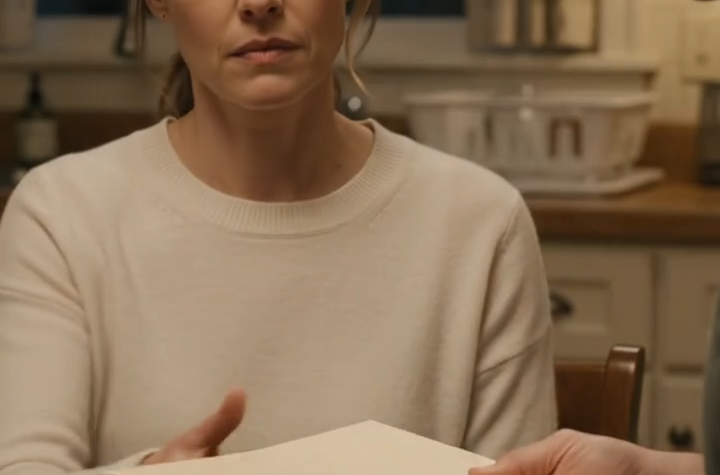
I showed the letter to Emily.
She read it twice and returned it to me.
“An admission isn’t the same as change,” she said.
She was right.
We did not rush forgiveness.
We did not use the baby as a bridge over damage nobody had repaired.
I told Teresa that any future relationship required a direct apology to Emily, respect for our boundaries, and no access to our home without invitation.
My sisters received the same conditions.
Lily apologized first without asking for anything.
Kayla took longer.
Brittany insisted she had only followed Teresa until I reminded her that adults are responsible for the cruelty they volunteer to perform.
Teresa eventually apologized to Emily in our living room, seated in the same place where she had once watched her wash dishes.
There were no snacks, no blanket, and no audience to support her version of events.
“I treated your marriage like a threat,” she said.
“I treated your pregnancy like weakness.
I was wrong.”
Emily listened without comforting her.
“Thank you for saying it,” she replied.
“Trust will take longer.”
Teresa nodded.
That was the beginning of accountability, not the end of consequence.
Some relationships survived in a smaller, more careful form.
Others never returned to what they had been.
I learned that restored dignity does not always look like a dramatic victory.
Sometimes it looks like a locked door, a paid bill that is no longer yours, or a wife who can rest without fearing who might enter her kitchen.
One evening, months after the night I found the notebook, I stood at the sink washing bottles.
Emily sat at the table with our son asleep against her chest.
The apartment was quiet except for the soft clink of glass and the baby’s breathing.
She looked at me and smiled.
I had once believed my duty was to carry everyone until my body broke.
Now I understood that love was not measured by how many people depended on my exhaustion.
It was measured by whether the person beside me felt protected, believed, and at home.