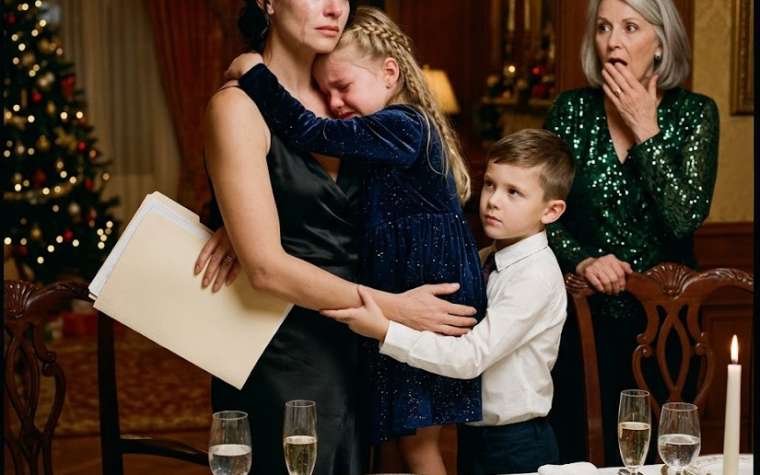
Sophia smiled through tears.
“I helped her,” she whispered.
“You did.”
The bruises faded over the next two weeks, changing from purple to green, then yellow, then disappearing completely.
The consequences did not fade as quickly.
At preliminary hearings, David’s attorney tried to suggest that the evidence was circumstantial.
The prosecutor answered with the timeline, the medical findings, the changing statements, and Jennifer’s recorded admission.
Months later, David entered a guilty plea rather than face a trial where every photograph would be enlarged before a jury.
He received a prison sentence, probation conditions, and a long-term order prohibiting contact with Lily.
Jennifer also accepted responsibility for her part.
Her sentence included supervision, mandatory counseling, parenting education, and tightly controlled visits.
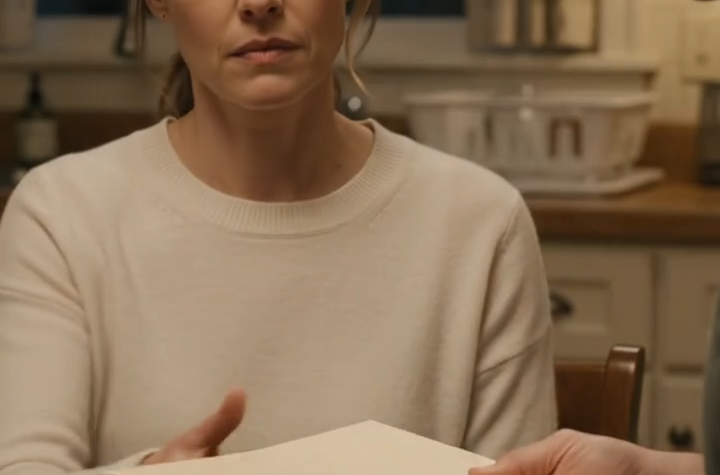
The first time I saw her after the arrests, we sat across from each other in a small room at the family court building.
She looked older than she had on the morning she brought Lily to my house.
“I was afraid of him,” she said.
“I know.”
“I thought if I did what he said, he would calm down.”
I looked at her hands resting on the table.
“You were afraid,” I said.
“But Lily was helpless.”
Jennifer began to cry.
“I know.”
That was the first honest thing she had said to me since the day of the bruises.
I did not forgive her in that room.
Forgiveness was not a door she could knock on once and expect me to open.
She had placed her baby in my arms carrying evidence of violence.
Then she had returned prepared to place the blame on me.
Fear had trapped her, but she had tried to build her escape out of my life.
That betrayal required more than tears.
Over time, Jennifer stopped defending herself.
During supervised visits, she followed every rule.
She attended counseling.
She listened when professionals told her that protecting a child sometimes means choosing the truth even when the truth destroys the life you thought you had.
Lily grew.
She learned to roll over on our living-room rug, then to sit, crawl, and pull herself upright against the same couch where Jennifer had once cried about her marriage.
Tom kept the original photographs in a secure evidence folder until the case ended.
I could not look at them without hearing Sophia’s voice again.
“Mom, look at this!”
For months, I heard those words in my sleep.
But eventually they stopped sounding like the beginning of something terrible.
They became the moment Lily’s silence ended.
One evening, almost a year later, Sophia sat on the floor changing her doll’s diaper.
Lily toddled beside her, laughing and trying to steal the wipes.
Sophia looked up at me.
“Should I tell you if something ever looks wrong?”
“Always.”
“Even if a grown-up says not to?”
“Especially then.”
She nodded as though committing the rule to memory.
Lily reached for her, and Sophia opened her arms.
The truth had not arrived like thunder that day.
It arrived through a child’s voice, a timestamped photograph, a hospital bracelet, and one calm decision not to look away.
Jennifer’s accusation did not become the story people remembered.
The evidence did.
And the little girl they tried to hide behind a diaper finally grew up in a home where no one mistook silence for safety.