“What movement?”
“I don’t know.”
“You slowed down.”
“I know.”
“Why?”
She covered her face.
“Because I saw her, okay?”
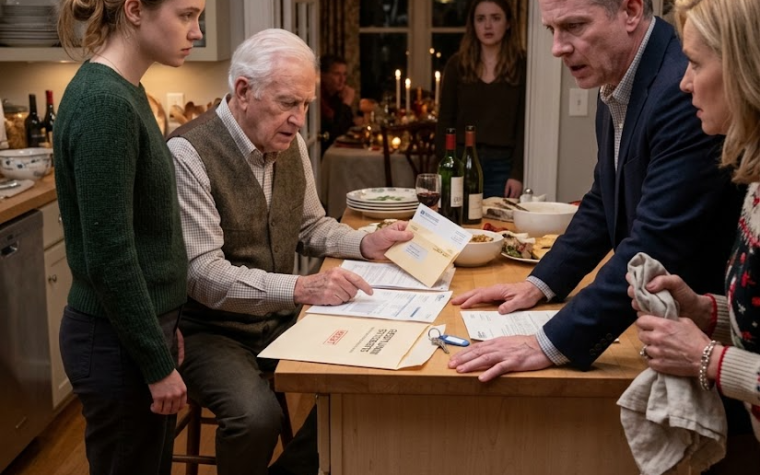
The waiting room disappeared around me.
There was only that sentence.
Because I saw her.
My mother sat down.
My father’s face went gray.
Briana kept talking now, faster and faster, as though momentum might save her.
“I saw her, but I thought she was moving back.
I thought she knew I was coming in.
I was irritated because there was stuff all over the driveway and I just wanted to park.
I thought she would move.”
I heard myself say, “She is six.”
“I know that.”
“You saw a six-year-old kneeling in front of your car and expected her to move for you.”
“I didn’t think I was going to hit her.”
“But you moved the car anyway.”
She started crying harder.
“I made a mistake.”
“Yes,” I said.
“You did.”
For once, I did not add anything to make the truth easier for her to carry.
When Marcus arrived, he looked like he had aged several years between the airport and the hospital.
I met him in the hallway before he saw my family.
He held my face, asked about Chloe, then went directly to our daughter.
I told him about the recording later, outside Chloe’s room.
He watched it once.
Then again.
He did not shout.
That somehow frightened Briana more when he finally walked into the waiting room.
He looked at her and said, “Do not contact Chloe.”
My mother immediately stood.
“Marcus—”
He held up one hand.
“And neither of you is going to pressure Lindsay about this.”
My father bristled.
“This is our family.”
Marcus looked toward Chloe’s room.
“So is she.”
There was nothing dramatic after that.
No miraculous speech changed my parents.
No apology repaired the driveway.
The consequences arrived in ordinary, believable pieces.
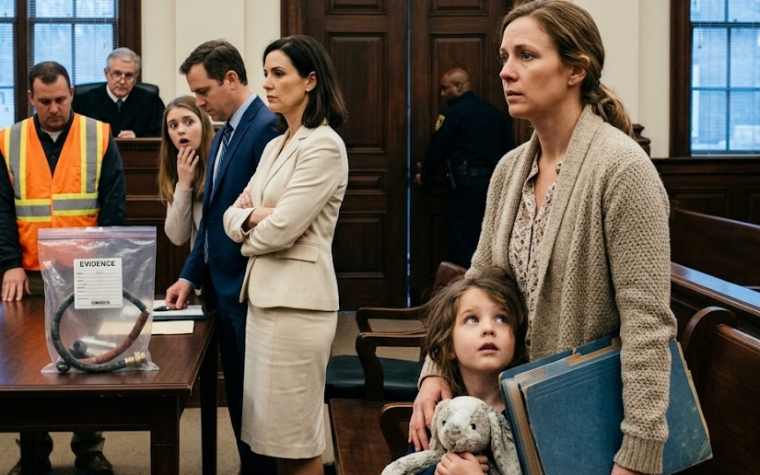
The recording was preserved.
What had happened was formally documented.
Briana could no longer rely on a version in which Chloe had suddenly appeared or in which she had never been seen.
My parents could repeat the word accident as often as they wanted, but they could not erase the moment the car slowed while my daughter was plainly visible.
More importantly, they could not erase Briana’s own admission that she had seen Chloe and moved forward because she expected a six-year-old to get out of her way.
For several days, my mother sent messages about forgiveness, family, misunderstandings, stress, and how terrible Briana felt.
Not one of those messages began with Chloe.
I stopped answering.