And when I started looking at condos again, I did not tell Diane or Lacy.
Not because I was hiding.
Because access to my life was no longer automatic.
Months later, I stood inside a small second-floor condo with beige walls, scratched hardwood floors, and a kitchen barely large enough for two people to turn around comfortably.
It was nothing impressive.
I loved it immediately.
The agent kept talking about the windows and the building reserve and the appliances.
I barely heard her.
I was looking at the front door.
My own front door.
For years, I had thought the condo fund was about property.
After everything that happened, I understood it differently.
It had always been about permission.
Permission to close a door.
Permission to decide who came through it.
Permission to have something that did not become communal simply because someone else wanted it.
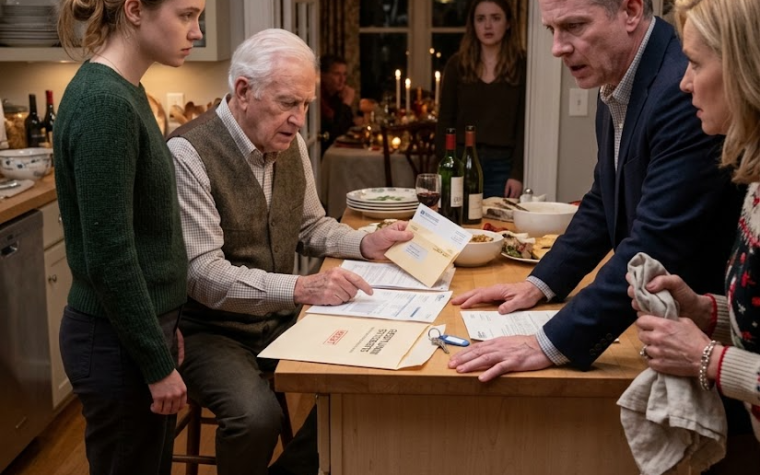
The day I finally held a key to my own place, I thought about the last time I had stood in my mother’s hallway with a folder in my hands.
Lacy had said she could do whatever she wanted in that house.
For a long time, that sentence had haunted me because she had been right in one terrible sense: Diane had created a home where Lacy expected boundaries to disappear whenever they inconvenienced her.
I could not change that house.
I could change which door I called mine.
I moved in with very little furniture.
Hannah brought takeout and helped me assemble a cheap bookshelf badly enough that we had to redo half of it.
I set my lockbox in the bedroom closet.
My navy scrubs hung behind a door nobody could open without my permission.
Late that night, after Hannah left, I sat on the living-room floor with my back against the wall.
There was no cake on the counter.
No balloons.
No bracelet clicking nervously in the hallway.
No sister telling me that what I earned belonged to her because she had decided she needed it more.
Just the low hum of my refrigerator and a new key resting beside me.
The money mattered.
Getting it back mattered enormously.
But that was not the thing I recovered when the front lock turned and those footsteps entered my mother’s hallway.
What I got back was the right to believe my own boundaries before someone else approved them.
I stopped asking whether protecting myself made me cruel.
I stopped confusing silence with peace.
And I stopped believing that being the dependable daughter meant everyone else was entitled to depend on me without my consent.
Three years of overnight shifts had bought more than a condo fund after all.
They bought me a door of my own.
This time, I was the one who decided who had the key.