“I’m done protecting you from accurate descriptions of what you did.”
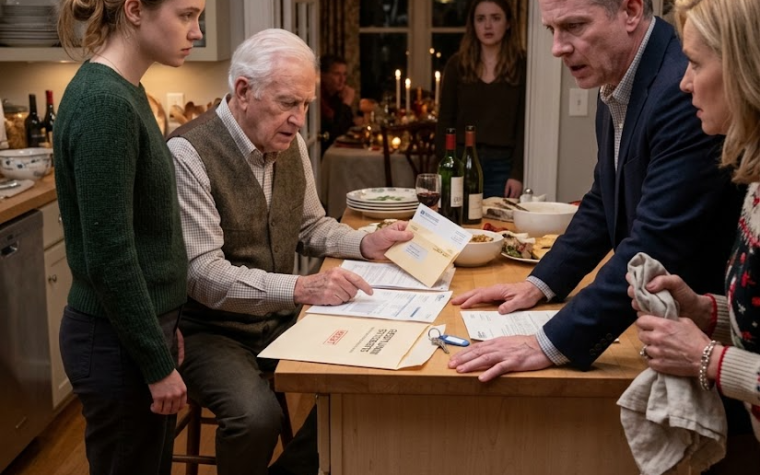
The lead agent ended the meeting when Barbara began demanding that I persuade investigators to release the house in time for a smaller ceremony.
The security sweep was completed that evening, but the wedding did not resume.
Too many vendors had left.
Too many guests had seen the federal vehicles.
Too many bridesmaids had been interviewed about the blood on the staircase.
Jessica blamed me publicly within the family.
Privately, she changed her story three times.
First, I had faked the collapse.
Then she claimed the hospital had exaggerated my condition.
Finally, when the surgical report and footage made both claims impossible, she said she had been under unbearable stress.
The investigators did not argue with her.
They simply placed each statement beside the others.
The hospital’s review was equally damaging.
Claire had documented her objections, my falling blood pressure, my request for help, and the family’s interference.
She had escalated repeatedly.
The failure had occurred above her, when staff accepted a refusal from someone who had never proved he could legally speak for me.
The hospital issued a formal admission of error, covered every medical expense, and changed its emergency-consent procedures.
Several administrators faced disciplinary review.
Claire received written recognition for preserving the record and refusing to let my family’s confidence override what she was seeing.
The federal inquiry found no planned attack, but it confirmed that my relatives had delayed emergency care, misrepresented their authority, and provided contradictory statements during a protected-person investigation.
The evidence was referred to state authorities and to my civil counsel.
No one promised me a dramatic courtroom conviction.
Real consequences began more quietly.
Preservation orders arrived.
Attorneys requested statements.
Insurance representatives stopped returning my father’s calls without counsel present.
The event company pursued cancellation costs.
The hospital’s lawyers sought reimbursement from those who had interfered.
My family’s private cruelty became a documented sequence with timestamps, signatures, video, and witnesses.
William could no longer dismiss it as an argument.
Barbara could not rearrange it into a prettier story.
Jessica could not crop it out of her wedding photographs.
I spent eleven days in the hospital and several more weeks in a secure recovery facility.
My parents sent flowers once.
I declined them.
Jessica sent an apology after her bridesmaids began distancing themselves from her.
It contained the sentence, “I’m sorry you felt abandoned.”
I sent it back through counsel with no response.
Claire visited before I was transferred.
She brought no flowers and offered no speech.
She placed a paper cup of terrible coffee on the windowsill and sat beside me.
“I should have moved faster,” she said.
“You fought them.”
“I still hear that monitor slowing.”
“So do I.”
She looked at the healing line beneath my hospital gown.
“You saved yourself with that device.”
I shook my head.
“The beacon brought help.
You were already trying to save me.”
Months later, when I was medically cleared, the agency issued me a replacement beacon.
The new device looked exactly like the old one: flat, silent, unmarked.
My tactical jacket had been cleaned and repaired.
The reinforced seam was stitched so neatly that nobody would have guessed it had ever been torn open by shaking fingers.
Before I returned to duty, Barbara asked for one final meeting.