“No.
It’s the first step.”
A local victim-services advocate helped arrange a safe place for the night and explained options I had never imagined applied to someone like me.
I had always associated domestic abuse with romantic partners.
I had never understood that being an adult did not make violence from a parent less real.
That first night away from the house, I barely slept.
Every hallway sound made me sit up.
At three in the morning, I took the damaged textbook out of my bag and stared at it.
Coffee had dried along one corner.
The cover was bent.
Several pages were wrinkled where they had hit the driveway.
I thought about throwing it away.
Instead, I found tape.
I repaired the spine badly, page by page, because apparently that was what I did when something valuable had been treated like trash.
The next morning I began the process of requesting a protective order.
Mom sent eleven messages before breakfast.
The first three were angry.
You embarrassed us.
Your father could lose everything over this.
You need to fix what you did.
The next messages changed tone.
Please come home so we can discuss this privately.
We can work something out.
Families forgive each other.
Then came the message that mattered most.
If anyone asks, tell them he only grabbed you because you refused to move.
I took screenshots.
I didn’t answer.
Lena tried a different approach.
I didn’t know Dad would go that far.
I read it three times.
She had stood there filming.
She had laughed while I was inside the trashcan.
She had posted the clip afterward.
But now that there were consequences, suddenly there was a distance between her and what happened.
I saved that message too.
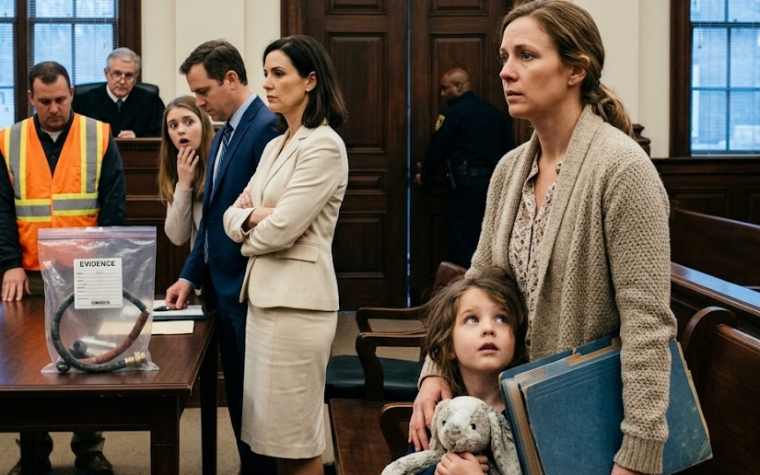
At the first court hearing, Dad looked smaller than he did in our driveway.
He wore a pressed shirt.
His hair was carefully combed.
Mom sat several seats behind him, rigid and furious.
Lena came too.
Nobody looked at me when I entered.
I carried a folder containing printed photographs, copies of the messages, information about the video, and the incident report.
The same damaged textbook sat in my bag beneath the chair.
Dad’s position was simple: he had been angry, but I was exaggerating the amount of force he used.
Then the recording was referenced.
His lawyer asked for time.
That was the moment I understood something about evidence.
People can argue with your memory.
They can call your tone disrespectful.
They can say you misunderstood a joke, provoked them, caused stress, were too sensitive, remembered things incorrectly.
A recording does not argue.
It simply plays.
The temporary protective order remained in place.
I was allowed to retrieve the rest of my belongings later without being alone with Dad.
Mom refused to be present.