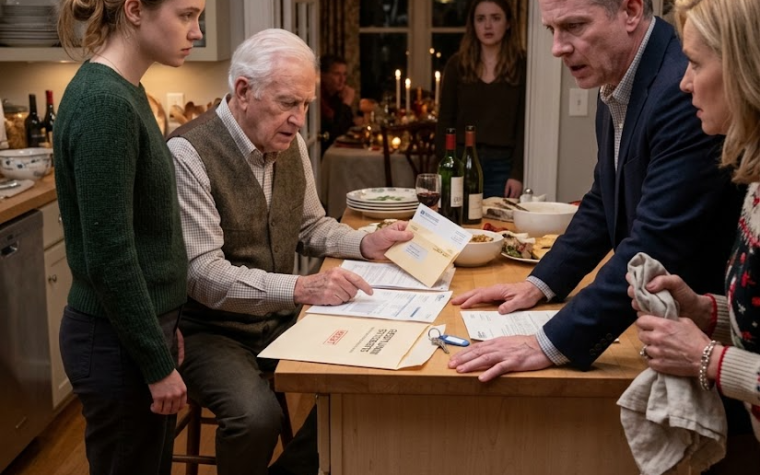
For once, someone in my family had said the thing plainly.
Several reunion guests contacted me over the following weeks.
Some apologized.
Some offered statements.
A few tried to explain that they had been drinking or assumed I was less badly hurt than I looked.
I stopped listening to explanations.
Megan became one of the formal witnesses.
The woman in red did too, though reluctantly, after investigators identified her from the videos.
The party that Alexis had wanted to use to impress her old classmates became the event that exposed her behavior to all of them.
No dramatic speech from me was necessary.
The evidence did the work.
I focused on healing.
My burns faded first.
The bruising took longer.
The incision from the delivery hurt every time I laughed, coughed, or tried to stand.
The emotional injury changed shape from day to day.
Sometimes I was furious.
Sometimes I grieved the sister I had spent years hoping Alexis might become.
Sometimes the deepest wound was still my mother’s voice saying, “She’s so dramatic,” while I lay bleeding beneath her.
Hannah spent weeks in neonatal care.
My husband and I learned the rhythm of monitors, feeding schedules, tiny diapers, and cautious good news.
Dad came almost every day.
He never arrived empty-handed, but the things he brought were practical rather than sentimental: coffee, clean clothes, phone chargers, sandwiches we forgot to eat.
One afternoon, he placed something beside my hospital bag.
The ceramic frog.
I stared at it.
“Why did you bring that?”
“I’m changing the locks,” he said.
“Figured this didn’t need to sit outside anymore.”
For the first time in weeks, I laughed.
It hurt my incision so badly that I immediately regretted it.
Dad laughed too.
The criminal case took time, as real cases do.
There were interviews, lawyers, medical documentation, and arguments over intent.
Alexis eventually faced consequences based on the assault and the injuries that followed.
The process was less cinematic than people imagine justice to be.
Mostly it was paperwork, waiting rooms, statements, and having to repeat the worst minutes of my life to strangers.
But the recording remained impossible to argue with.
My mother kept asking me to help Alexis.
At first she called.
Then she emailed.
Then she sent a handwritten letter through a relative.
She said Alexis had “already suffered enough.”
I looked across the NICU at Hannah sleeping inside her bassinet, wires taped gently to her tiny body.
For the first time, I understood that forgiveness and access were not the same thing.
I did not answer Mom.
Months later, Hannah finally came home.
She was still small, but healthy enough to leave the hospital.
My husband carried her through our apartment door while I followed with a bag full of medications, instructions, spare bottles, and more fear than I wanted to admit.
That first night, I sat beside her crib long after she fell asleep.
The apartment was quiet again.
But it was not the same silence I had escaped when I drove to my parents’ house that October afternoon.
This silence felt protected.
Chosen.
My phone buzzed once on the table.
A message from Dad.