Six months earlier, Julian’s company had received a contract to supply portable water-purification units for temporary military installations.
The units were supposed to function under extreme heat, heavy sediment, and extended use.
Every component had to meet a specific standard because failure could contaminate an entire water supply.
On paper, Julian’s units passed every test.
The first warning came from a maintenance officer overseas who noticed that replacement filters were failing far earlier than the approved model should have failed.
The casing numbers matched the contract.
The internal components did not.
The report reached my logistics command because I had previously worked with the approved manufacturer.
At first, I assumed a warehouse had mixed two shipments.
Then I saw the inspection photographs.
One image showed a technician holding a certified filter beside a testing unit.
The serial number was visible on the casing.
In another photograph supposedly taken three weeks later, the scratches on the workbench were identical, the technician’s glove had the same torn seam, and a clock on the rear wall showed the same minute.
The tests had not been repeated.
The photographs had been rearranged and resubmitted.
I requested the original files.
Julian’s company sent compressed copies without metadata.
I requested the independent laboratory records.
The laboratory said it had tested only one prototype, not the production units listed in Julian’s invoices.
Then I found my own name.
An approval page included a digital signature copied from a logistics assessment I had completed years earlier.
Beneath it, I was described as a military compliance adviser who had reviewed Julian’s production process.
I had never entered his factory.
I had never advised his company.
And I had never authorized him to use my name.
When I reported the forged approval, I disclosed immediately that Julian was engaged to my sister.
I was removed from the decision-making chain so no one could claim I had used my position against him.
That was the part Julian never understood.
He thought recusal meant silence.
It did not.
I preserved the original report, surrendered my devices for examination, and answered every question under oath.
A separate team conducted the investigation.
Independent engineers bought sealed production units from two storage sites and tested them without telling Julian which units had been selected.
Four failed.
The fifth contained the correct filter but carried adhesive residue showing that its casing plate had been replaced.
The investigation expanded.
A former warehouse supervisor admitted that Julian had ordered employees to place approved filters inside a small number of demonstration units while cheaper components went into the actual deliveries.
Another employee produced messages instructing staff to alter serial-number logs before an inspection.
The final evidence came that morning.
Investigators recovered a spreadsheet listing each shipment, the cheaper components installed, the amount saved, and the initials of the people who had approved the substitutions.
Julian’s initials appeared on every page.
The review board voted to terminate the contract for default and refer the findings for criminal investigation.
I had attended in uniform because I had been ordered to provide testimony about the forged approval bearing my name.
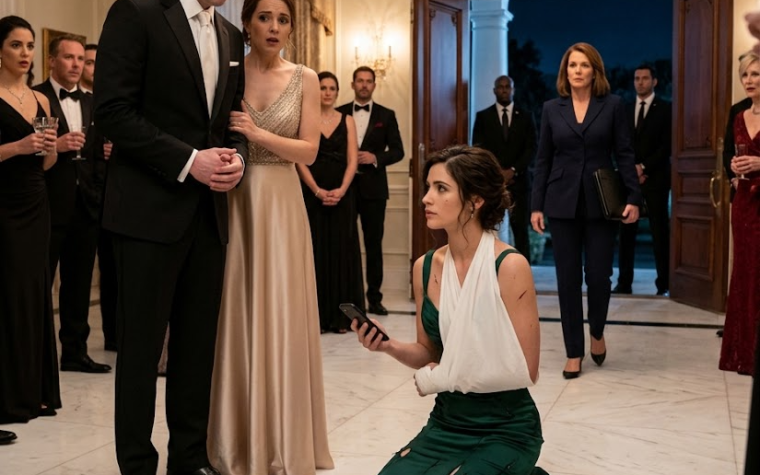
I had come to the ballroom afterward for one reason: investigators believed Julian planned to use the engagement party to secure additional private money before the termination became public.
The investors were not simply guests.
They were targets.
Julian had scheduled private meetings throughout the evening and prepared subscription agreements based on projected government revenue that no longer existed.
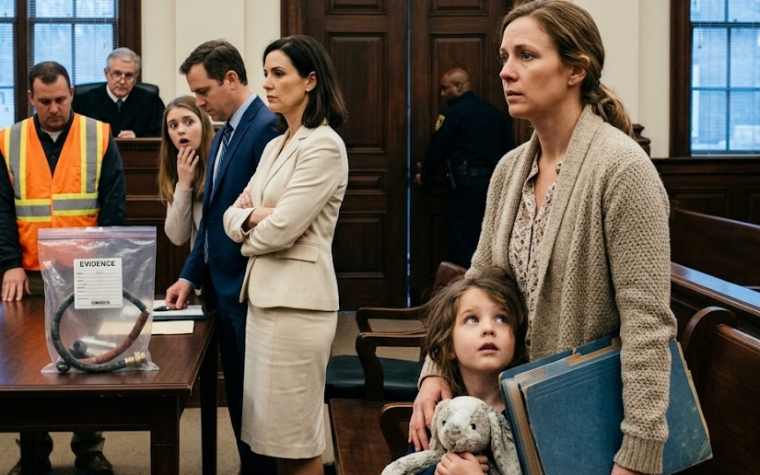
The investigator looked toward the evidence technician.
He lifted Julian’s phone from the table, placed it inside a shielded pouch, and sealed it.
Julian’s composure finally cracked.
“You cannot take that,” he said.
“It contains privileged business communications.”
“It may also contain deletion activity beginning forty-three seconds before we entered,” the investigator replied.
Every eye turned toward the phone.
I remembered Julian touching it when my watch showed twenty-seven seconds.
He had not been checking the time.